The Elon Musk SpaceX Russia trip was meant to end with cheap rockets bought from Moscow. It ended with an insult, a failed negotiation and a decision to build his own instead.
Elon Musk's SpaceX Russia Trip: The Meeting That Started It All
◆ In Summary
In 2001, Elon Musk did not want to build a rocket company. He wanted to buy three refurbished Soviet missiles and send a small robotic greenhouse to Mars, a project called Mars Oasis. Two trips to Moscow went nowhere, and the price kept rising every time he asked. On the flight home from the second trip, he ran the numbers on building a rocket himself instead. That single spreadsheet is why SpaceX exists.
◆ At a Glance
| Project | Mars Oasis |
| Rockets sought | 3 refurbished Soviet ICBMs (Dnepr) |
| First Moscow trip | October 2001 |
| Second Moscow trip | February 2002 |
| Companies met | NPO Lavochkin, Kosmotras |
| Initial price quoted | Around $8 million per rocket |
| Price by second trip | Around $20 million per rocket |
| SpaceX founded | 14th March 2002 - Musk was 30 years old at the time |
In the summer of 2001, a phone rang in Logan, Utah, and a stranger introduced himself in one long, unpunctuated breath. He was Elon Musk. He had made his money at PayPal. And he needed Russian rockets, because he had decided humanity needed to become a multi-planetary species and this seemed like the fastest way to ignite the idea. The man on the other end, a rocket engineer named Jim Cantrell, had spent years buying decommissioned Soviet hardware at bazaars where launch systems sat next to stacking dolls. He was, improbably, exactly the right person to call.
The Elon Musk SpaceX Russia Trip Nobody Expected to Matter
Musk's actual goal that year had nothing to do with building a rocket company. He wanted to send a small robotic greenhouse to Mars, a project called Mars Oasis, and broadcast pictures of green shoots growing in red soil back to Earth. The idea was not primarily scientific. It was theatrical, in the best sense. A photograph the evening news could run in eight seconds, embarrassing enough about NASA's shrinking planetary budget that Congress might feel compelled to fix it. None of that required Musk to build anything himself. It just required a rocket cheap enough to make the stunt affordable, and in 2001 there was exactly one category of vehicle that fit: a decommissioned Soviet ICBM, sold off as part of post-Cold War disarmament.
Musk tried Europe first. He and two travelling companions, his college friend Adeo Ressi and Cantrell, went to Paris to see if Arianespace would sell him a launch. That went nowhere, priced well outside what a greenhouse mission could justify. So the group turned to Moscow instead, in October 2001, to meet the people who actually built the rockets Musk wanted.
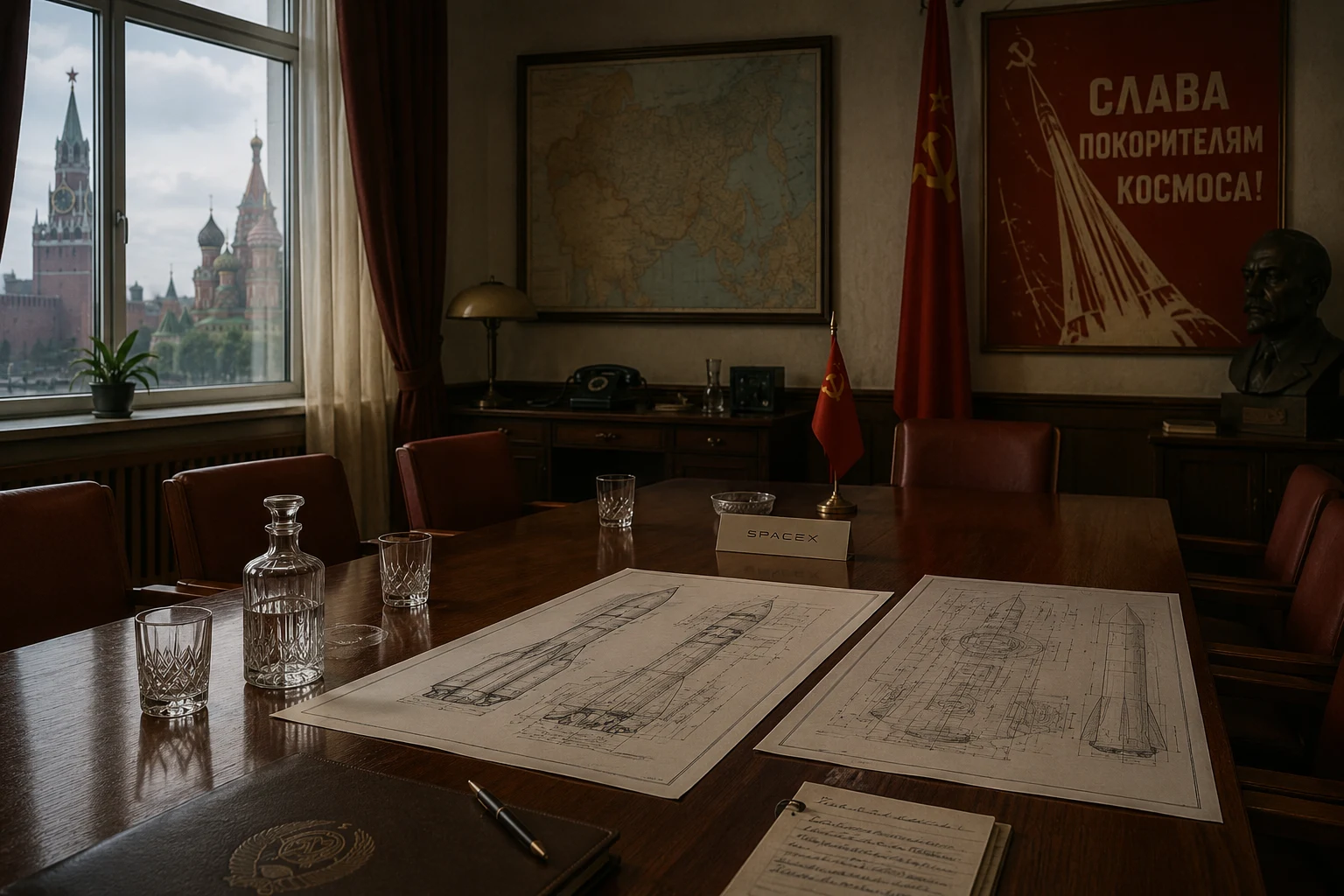
A Trip to Moscow, and a Considerable Amount of Vodka
The meetings did not go the way Musk expected. Russian officials at NPO Lavochkin and Kosmotras treated the group, by most accounts, as tourists rather than customers. There was a great deal of vodka involved, toasted in twos and threes an hour, which is not obviously conducive to closing an arms deal. Cantrell has since described watching Musk pass out at the table before he did the same himself. Not the version of the SpaceX origin story that makes it into the marketing material.
The Russians, by Cantrell's account, treated the 30-year-old Musk as a novice with more money than credibility, and one of their chief designers reportedly showed his contempt by spitting near the visitors' feet. The group flew home without a rocket.
Why the Price Kept Rising Every Time Musk Went Back
A second trip followed in February 2002, this time with an extra passenger. Mike Griffin, who had worked at the CIA's venture capital arm and would later run NASA itself, came along to help Musk make sense of what was being offered. Each time they went back, the offer and the price changed. According to Cantrell, the Russians had originally discussed a price in the region of eight million dollars per rocket. By the second trip, the number had climbed to something closer to twenty million each, for three. Not exactly a loyalty discount. It put the whole plan well outside what Mars Oasis could justify on any budget Musk was prepared to spend.
The Spreadsheet That Ended Mars Oasis and Started SpaceX
What happened next is the part of the story SpaceX tells often, and the detail varies slightly with who is telling it, though the shape stays the same. On the flight home, Musk pulled out a laptop and started working through the actual cost of building a rocket from raw materials rather than buying one secondhand from a country that no longer particularly wanted to sell. According to early investor Steve Jurvetson, Musk calculated that the raw materials for a rocket amounted to roughly three percent of what a finished launch actually cost to buy. Aluminium, kerosene, liquid oxygen, electronics, labour. Add it all up and you are nowhere near the sticker price. Somebody, somewhere, was making an enormous margin on getting things into space, and it was not going to be the Russians anymore.
That gap is not really a story about Russian obstinance. It is a story about margin, and Musk seems to have understood almost immediately what it implied. If launch itself was the bottleneck holding back every space ambition he had, including his own greenhouse, then the rational move was not to keep shopping for a cheaper supplier. It was to remove the supplier from the equation entirely.
Musk founded SpaceX on 14th March 2002, a few weeks after that flight home, putting roughly a hundred million dollars of his own PayPal fortune behind it. Mars Oasis, the greenhouse that started the whole search, never flew. The rocket that would have carried it never got bought. What did get built, eventually, running through years of failure that very nearly ended the company on its own account, was Falcon 1. I still think there is something almost funny about how close humanity came to sending a plant to Mars instead of a company that builds its own rockets. The plant would have been a great stunt. But a stunt is all it would have been.
Frequently Asked Questions
Why did Elon Musk go to Russia in 2001?
Musk travelled to Moscow to buy refurbished Soviet ICBMs for Mars Oasis, a project to send a small robotic greenhouse to Mars and reignite public interest in space exploration.
Did Elon Musk buy a rocket from Russia?
No. Across two trips in October 2001 and February 2002, Russian companies including NPO Lavochkin and Kosmotras either treated Musk dismissively or raised their prices, and no purchase was made.
What made Elon Musk decide to build his own rockets?
On the flight home from the second Moscow trip, Musk calculated that the raw materials for a rocket cost only a small fraction of what a finished launch sold for, convincing him he could build rockets more cheaply himself.
When was SpaceX founded?
SpaceX was founded on 14th March 2002, a few weeks after Musk returned from his second trip to Russia, with roughly $100 million of his own money.
◆ Also In The Stars
◆ Go Deeper
Recommended
Elon Musk: Walter Isaacson
Amazon ↗
Affiliate links — we may earn a small commission at no cost to you.