◆ What The Stars Say Now ◆
The Present
The stars do not pause. The celestial record is being written right now, in crewed flights to the Moon, rockets that land themselves and discoveries that change what we know about space. This is what is unfolding.
THE PRESENT
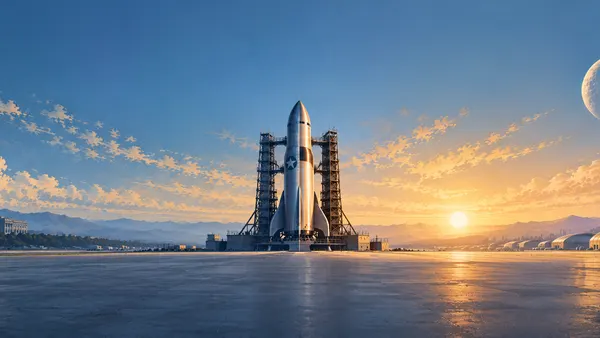
The Privatisation of Space: What This Means for NASA
NASA still funds nearly everything in American spaceflight, from Boeing to SpaceX. But for crew transport to orbit, it no longer owns the hardware or the risk. Here's what that actually means, and what it doesn't.

The Multiverse Theory and Parallel Universes Explained
Is our universe one of many? The word 'multiverse' began in 1895 meaning something else entirely, before physics adopted it for three different theories. We ask what each claims and whether any qualify as science.
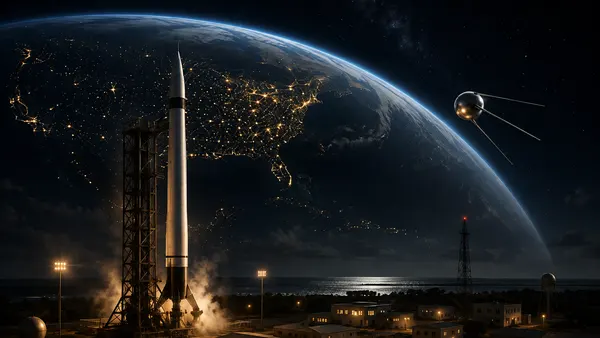
Why Was NASA Created? The Sputnik Panic
Sputnik humiliated America in 1957. Eisenhower's answer was to build a civilian space agency, not a military one, growing it out of an obscure 1915 aeronautics committee whose structure still shapes NASA policy today.
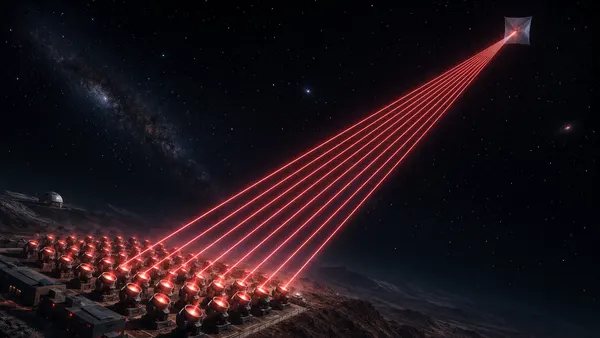
Breakthrough Starshot: Is Its Interstellar Probe Still Alive
Backed by Stephen Hawking and $100 million, Breakthrough Starshot promised a probe at Alpha Centauri within a lifetime. Discover what it actually built, where the money went, and why nobody agrees what happens next.
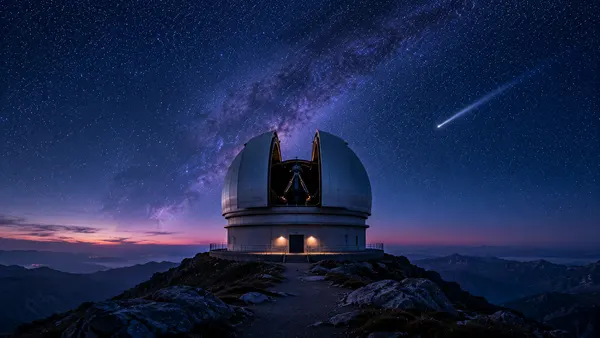
Vera Rubin Observatory's Hunt for Interstellar Objects
Only three interstellar objects have ever been confirmed passing through the solar system. The Vera Rubin Observatory, built to catch the next one, already had 2025's 3I/ATLAS in its data ten days early, and missed it.
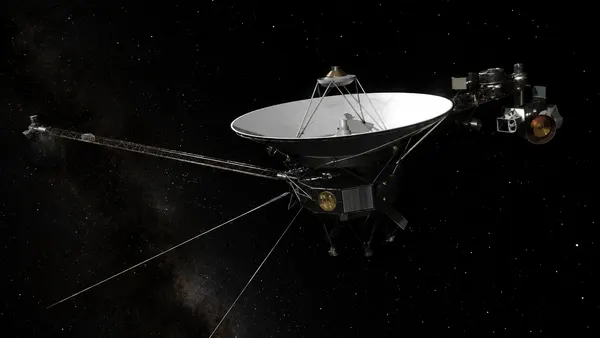
Voyager 1 & 2: The Journey to Interstellar Space
Launched in 1977 carrying a golden record, Voyager 1 and 2 are the only confirmed spacecraft in interstellar space. Nearly 50 years on, both are still sending data back, running on power that can never be refilled.
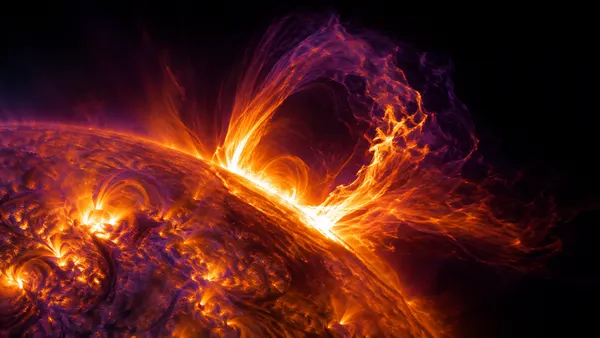
What Is a Solar Flare? The Science Explained
A solar flare is a burst of radiation from the sun's magnetic field snapping and reconnecting. NASA and NOAA grade them A to X, each letter ten times stronger. The strongest, in 2003, overwhelmed the sensor measuring it.
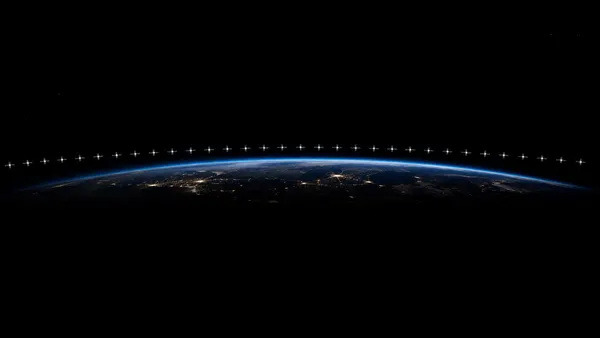
How Many Satellites Does Starlink Have? The Full Story
Starlink now has more than 10,700 satellites in orbit, over half of everything active in Earth orbit. From 60 satellites in 2019 to the largest constellation in history, and SpaceX's only profitable business line.
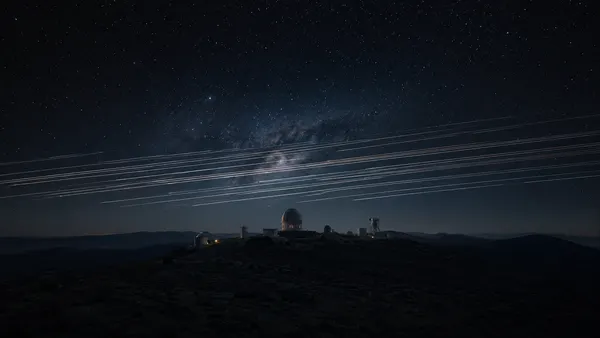
Why Do Astronomers Hate Starlink and Its Rivals?
Astronomers first spotted the problem in 2019, when early Starlink satellites left bright streaks across telescope images. SpaceX promised a fix, but 10,000 satellites later, astronomers say it still hasn't gone away.
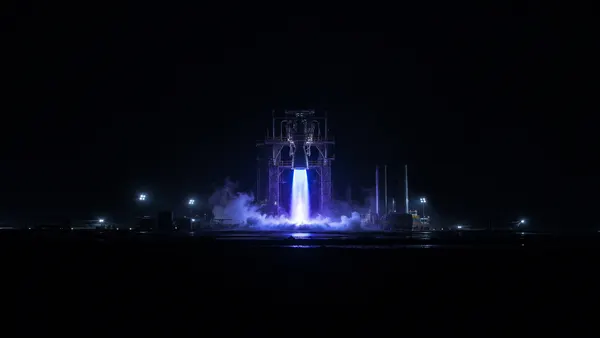
Inside the Raptor Engine: The Physics Behind Starship
Discover how the SpaceX Raptor engine works, why it burns methane instead of kerosene, why full-flow staged combustion had never flown before Starship, and what makes it the most efficient rocket engine ever built.
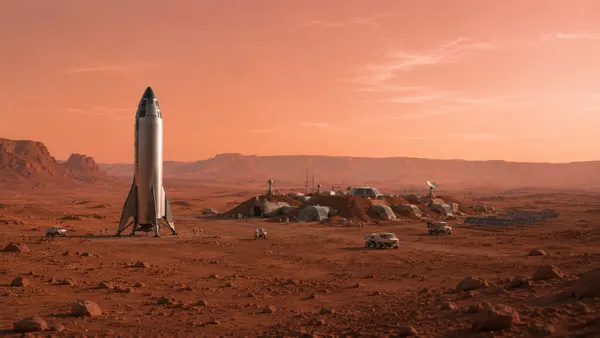
Can SpaceX's Starship Reach Mars, or Just the Moon?
Discover why Musk just delayed SpaceX's Mars mission by years, which Starship version will actually attempt it, why the target shifted to the Moon first, and the real engineering and human cost nobody's pricing in.
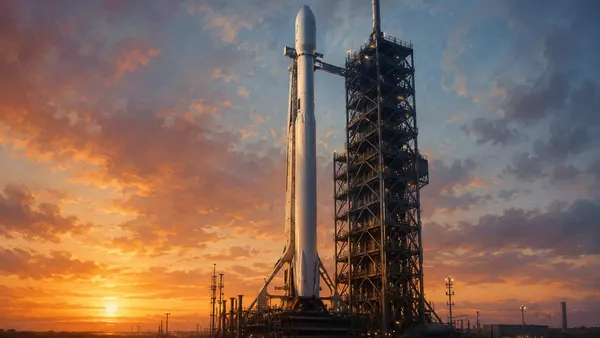
How SpaceX Beat NASA's Established Contractors
Discover how the bankrupt contractor Rocketplane Kistler nearly took SpaceX's NASA contract after a 2004 protest, why cost-plus deals kept failing and how the COTS programme's milestone funding changed spaceflight.
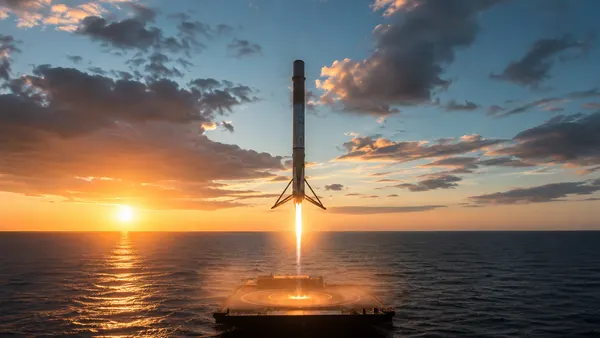
Why Reusable Rockets Matter to Space Travel
Falcon 1 proved SpaceX could reach orbit. Reusability was a riskier bet, one NASA and other agencies had tried and failed at for decades. Here is how SpaceX pulled it off, and why nobody was sure it would work.
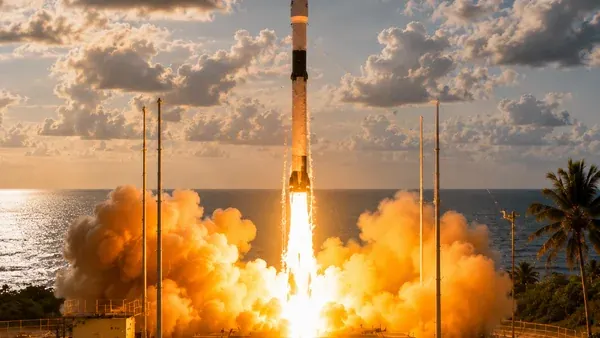
Why Falcon 1 Failed Three Times Before It Finally Flew
Falcon 1 blew up three times over four years, the last of its money nearly gone with it. Built from spare parts in six weeks, the fourth launch worked, and secured a $1.6bn NASA contract that kept SpaceX alive.

Elon Musk's Russia Trip: How SpaceX Really Began
In 2001, Musk did not want a rocket company. He wanted Soviet missiles and a greenhouse on Mars. Two trips to Moscow went nowhere, so he ran the numbers on a rocket himself. That spreadsheet is why SpaceX exists.

History of SpaceX: The Journey From Falcon 1 to Starship
SpaceX's Starship is the largest rocket ever built. Three early flights exploded before Flight 5 caught the booster mid-air. This is the full story, from Falcon 1's repeated failures to the rocket built to reach Mars.
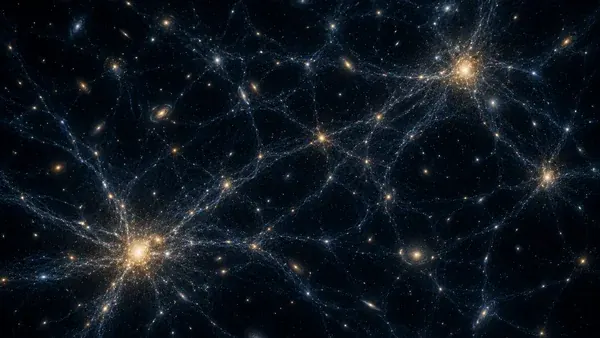
What Is Dark Matter Made Of? The Search So Far
Dark matter makes up around 27% of the universe, yet nobody knows what it is made of. Scientists can see its gravitational effects, but the particles behind them remain one of physics' greatest unsolved mysteries.

Is Planet Nine Real? The Hunt for a Hidden World
Planet Nine is either the biggest undiscovered object in the solar system or a pattern that does not exist. Two Caltech astronomers built the case over a decade, and the Vera C. Rubin Observatory should settle it.

DART: NASA's Planetary Defence Test on Dimorphos
Humanity now knows it can deflect an asteroid. Whether it can do so in time, with enough warning, and with the international cooperation required, is a different question entirely — one DART never had to answer.

What Artemis II Proved: The Full Mission Assessment
The heat shield held, the crew splashed down safely and Artemis III is on track for 2027. The data tells a messier story: a redesigned reentry trajectory, a valve needing fixing and an optimistic 2028 landing date.
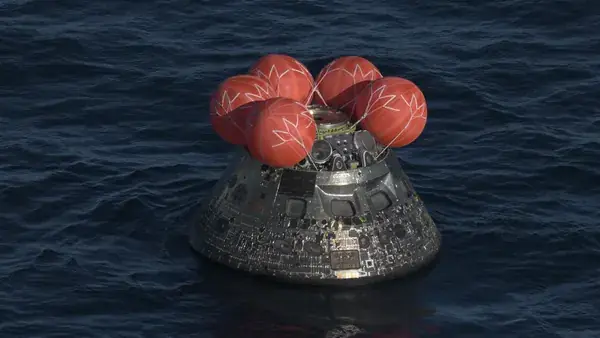
Artemis II Splashdown: How the Moon Crew Came Home
The heat shield held, the parachutes deployed, and four astronauts are home. Mission Control called it a perfect bullseye. What went unsaid is that several engineers had formally objected to flying that hardware.
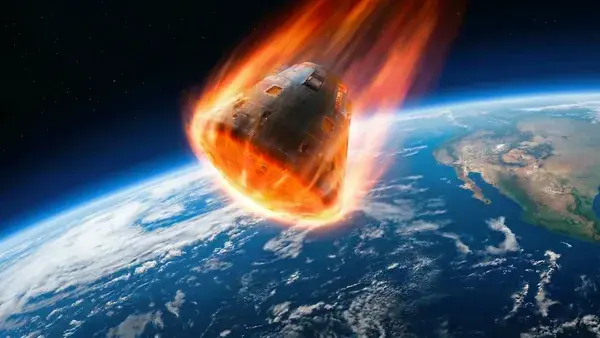
Artemis II Crew: Life After Returning From the Moon
The Artemis II crew were home within a day of splashdown. What microgravity, radiation and the overview effect do to the human mind takes considerably longer to resolve. This is about the psychology of coming back.
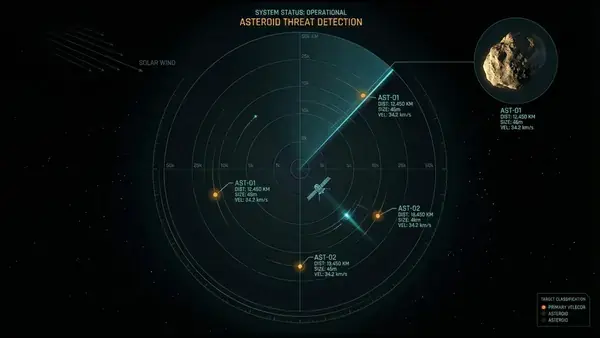
15,000 City-Killer Asteroids Are Still Missing, NASA Says
In February, NASA's acting planetary defence officer told a scientific conference that 15,000 city-killer asteroids remain undetected. We have no spacecraft ready to deflect any of them. It keeps her up at night.
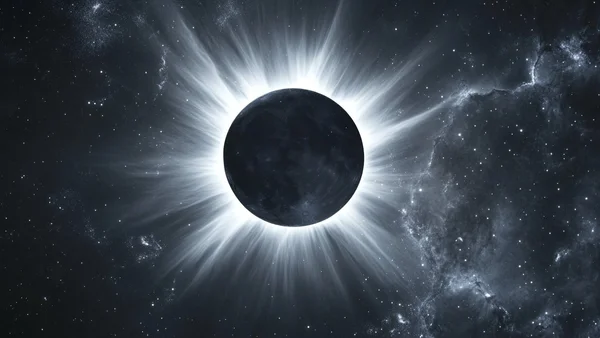
Artemis II Eclipse: The Solar Eclipse Not Seen on Earth
On 6th April, four astronauts watched a solar eclipse that nobody on Earth could see. It lasted nearly an hour. The sun vanished behind the moon and the corona blazed into view. Some moments belong entirely to the sky.
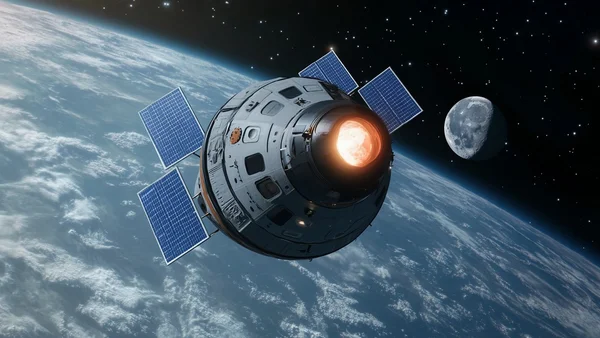
Artemis II: The First Crewed Moon Flight Since Apollo 17
Four astronauts flew around the moon in April 2026. The first humans beyond Earth orbit since 1972, and the first to break the distance record set by Apollo 13 in 1970. Here is what actually happened out there.