Artemis II is being called a success, and rightly so. After the praise comes the harder part: working out what actually worked and what didn't.

What Artemis II Proved: The Full Mission Assessment
◆ In Summary
Artemis II proved the rocket works and the crew came home safe. The heat shield held, though NASA had already committed to redesigning it before the mission launched. The vent line, the valve and the communications issue all need resolving before Artemis III. The 2028 landing date is a different conversation from the one the post-splashdown press conference was having.
◆ At a Glance
| Mission | Artemis II crewed lunar flyby |
| Splashdown | 10 April 2026 |
| SLS performance | Placed Orion at 18,000+ mph at engine cutoff |
| Heat shield | Early inspection better than Artemis I — redesign still required for Artemis III |
| Issues identified | Urine vent line, service module valve, post-splashdown comms |
| Distance record | 252,756 miles from Earth |
| Science | 6 meteoroid impacts, solar corona photography |
| Artemis III target | 2027 launch, 2028 crewed landing |
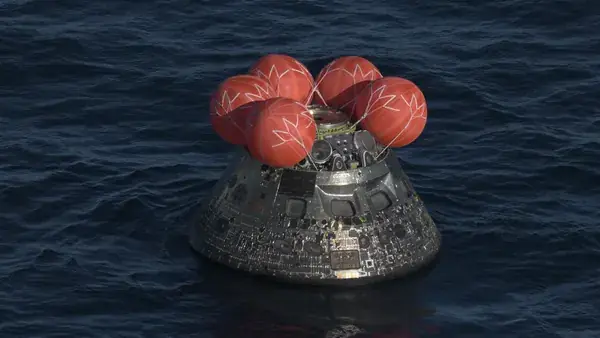
On 10 April 2026, at 8:07pm Eastern time, an Orion capsule hit the Pacific Ocean off San Diego. Seventeen miles per hour, three parachutes, four astronauts. All of them were fine, which is the most important sentence in this piece and also the one that was genuinely not guaranteed.
What did not go exactly as planned is a longer list, and NASA's post-splashdown press conference was where you could hear the gap between the official tone (mission managers visibly delighted, phrases like "on track" deployed with confidence) and the specific words chosen when journalists pushed on the details. Howard Hu, the Orion programme manager, said the team had gathered "a lot of data" on the heat shield. Amit Kshatriya, NASA's associate administrator, acknowledged the turnaround for Artemis III was tight. Two carefully chosen phrases. Neither of them answers the questions underneath.
What Artemis II Proved: Start With the Heat Shield
Start with the heat shield, because it is the story underneath the story. Before launch, a number of engineers objected to flying Artemis II with the existing AVCOAT shield, on the grounds that erosion patterns observed after Artemis I's reentry were not fully understood. NASA reviewed the concerns, conducted additional testing, and flew anyway. Jared Isaacman, the agency administrator, had reviewed the analysis in January 2026 and signed off. Some of the objecting engineers were satisfied by the additional data. Others were not, and their concerns had already surfaced in public reporting before the mission launched.
The early inspection results are genuinely good news. Diver imagery taken immediately after splashdown found the shield had fared considerably better than after Artemis I, when chunks of the AVCOAT ablative material came away in patterns nobody had predicted. This time the erosion was reduced in both quantity and size, and matched what ground testing had suggested it would look like. That is a meaningful improvement. It does not mean the heat shield question is settled. Airborne imagery of the crew module obtained during reentry will be reviewed in the coming weeks, providing further insight into when and how char loss occurred. The full picture is still coming in, and it may take weeks. What is harder to explain away is that NASA had already committed to redesigning the shield for Artemis III before the mission launched, not after it. The reentry the crew actually flew was not the one planners originally drew up, either.
The original plan called for a skip-entry profile, in which Orion would briefly dip into the upper atmosphere to generate lift, bleed off heat and improve landing precision, the same approach used during Artemis I. That profile was abandoned and replaced with a steeper direct entry trajectory to limit heating duration, precisely because of what Artemis I's heat shield came back looking like. It worked, and the crew are home. The more pertinent question is whether the shield is ready for Artemis III, which is a different mission entirely. NASA's decision to redesign it regardless suggests the answer is not yet.
What Other Issues Did Artemis II Uncover?
There were other things. A urine vent line issue arose during the mission, and teams are currently working to identify the root cause and initiate corrective action before Artemis III. The service module needs a valve redesign. After splashdown, NASA reported a communications issue between Orion and recovery teams that temporarily prevented them from approaching the spacecraft. None of these are mission-ending problems. Some of them, on a longer or more complex flight, would be considerably more serious than they were here.
What Did Artemis II Actually Prove?
Here is what Artemis II did genuinely prove. The Space Launch System works. An early assessment indicates the rocket placed Orion exactly where it needed to be, the spacecraft hitting more than 18,000 miles per hour at main engine cutoff. The SLS, at least, is not the problem. The capsule survived ten days in deep space and came home. The crew had named it Integrity, which turned out to be apt. It broke the Apollo 13 record, reaching 252,756 miles out, and nobody has been that far since December 1972. Most of the people watching the splashdown were not born the last time it happened, a fact that tends to get approximately one sentence in the engineering debrief before everyone moves on to the punchlist.
What Science Did Artemis II Produce?
The mission also produced science. Six meteoroid impact flashes were observed on the lunar surface during the eclipse window. The solar corona was photographed during nearly an hour of totality that no ground-based observatory can replicate. The far side of the moon was observed directly, with the crew naming craters along the way, one for Wiseman's late wife, a detail that appeared briefly in post-splashdown coverage and then mostly vanished. Test flights generate more data than headlines.
Is Artemis III Still on Track for 2028?
The official timeline has Artemis III launching in 2027, with crewed surface missions from 2028. The current data will have a considerable amount to say about whether that holds, and the engineers know it. The redesigned heat shield needs to be built, tested and certified. The valve, the vent line, the communications protocol: all of it feeds into a programme that has already slipped its schedule several times across successive administrations. Kshatriya said the agency was "learning to move quicker." Given that the redesigned heat shield, the valve, the vent line and the communications protocol all need resolving before 2027, that ambition will be tested soon enough.
Humans travelled to the vicinity of the moon and came back. The rocket works. Well over a hundred billion dollars since Apollo, and in April 2026 it produced something genuinely worth watching. None of that is nothing. The 2028 landing date, though, is a different conversation, one the post-splashdown press conference was visibly not having. The data will drive it. So will the budget, the schedule and whatever the next set of engineers find when they open up that heat shield properly. Some of them will have opinions. They usually do.
The Artemis II Series
Frequently Asked Questions
Was the Artemis II heat shield a problem?
The heat shield performed better than after Artemis I, with less erosion and smaller char loss. However, NASA had already decided to redesign the shield for Artemis III before Artemis II launched. Early inspection results are encouraging but the full picture from airborne reentry imagery will take weeks to emerge.
What issues were found after Artemis II?
Post-mission assessments identified three items needing resolution before Artemis III: a urine vent line issue, a service module valve requiring redesign, and a communications failure between Orion and recovery teams after splashdown. None were mission-ending but all require corrective action.
Why did NASA change the Artemis II reentry trajectory?
The original skip-entry profile was replaced with a steeper direct reentry to reduce heating duration on the heat shield. The change was a direct response to erosion patterns observed on the Artemis I heat shield that engineers did not fully understand.
What did Artemis II actually prove?
The Space Launch System performed correctly, placing Orion precisely on target. The crew survived ten days in deep space and returned safely. The mission produced genuine science, including solar corona photography and six meteoroid impact observations. What it did not settle is whether the programme is ready for a lunar surface landing by 2028.
Is Artemis III still on track for 2028?
NASA says it is targeting a 2027 launch and 2028 crewed lunar landing. The heat shield redesign, valve correction, vent line fix and communications protocol update all need completing first. The programme has slipped its schedule several times before.
◆ Also In The Stars

◆ Go Deeper
Recommended
Endurance: A Year in Space, A Lifetime of Discovery
Amazon ↗
Affiliate links — we may earn a small commission at no cost to you.