Fifty-three years since anyone left Earth orbit. Four astronauts just broke the streak, and the distance record Apollo 13 set on its way home in 1970.
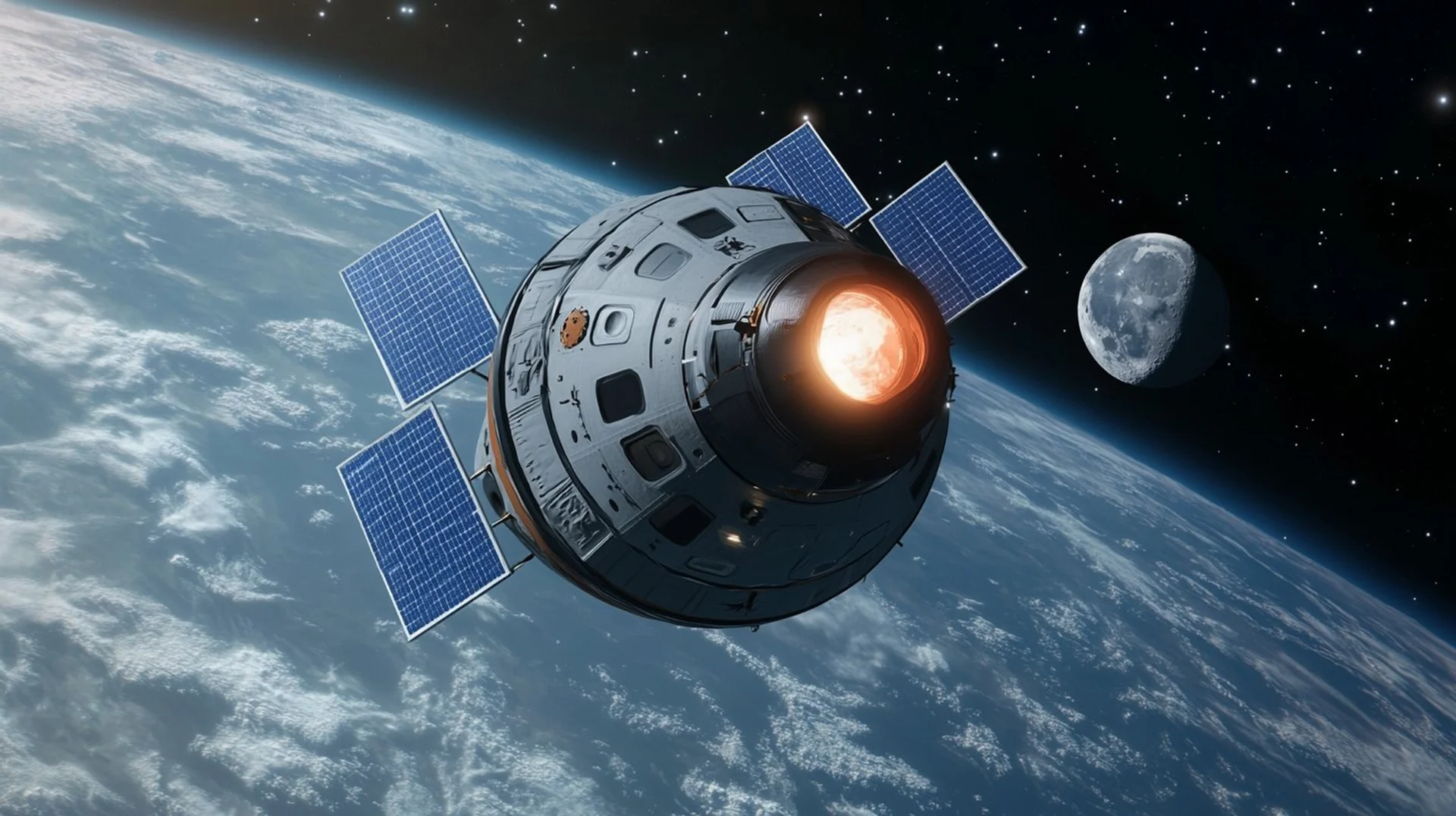
Artemis II: The First Crewed Moon Flight Since Apollo 17
◆ In Summary
NASA's Artemis II launched on 1 April 2026 and sent four astronauts around the moon, the first humans beyond Earth orbit since Apollo 17 in 1972. They broke the distance record set by Apollo 13, witnessed a solar eclipse from beyond the lunar horizon and splashed down ten days later. The mission proved the hardware works.
◆ At a Glance
| Launch | 1 April 2026 |
| Splashdown | 10 April 2026 |
| Duration | 10 Days |
| Max Distance | 252,756 miles from Earth |
| Crew | Reid Wiseman · Victor Glover · Christina Koch · Jeremy Hansen |
| Mission Type | Crewed lunar flyby, free-return trajectory, no landing |
At 1:56 p.m. EDT on 6 April 2026, humans broke their own distance record. The previous mark had stood since April 1970, set by Apollo 13, three astronauts nursing a crippled spacecraft home with the power failing. Reid Wiseman's crew surpassed it quietly, continuing outward to 252,756 miles before lunar gravity grabbed their trajectory back. Jeremy Hansen, on his first spaceflight, chose the moment to say something that has been quoted repeatedly since: "We choose this moment to challenge this generation and the next to make sure this record is not long-lived."
Fifty-three years is a long time to leave the Moon unvisited by humans. Most of the people watching NASA's livestream that day were not alive the last time this happened, and the ones who were would have been children.
What Was the Artemis II Mission?
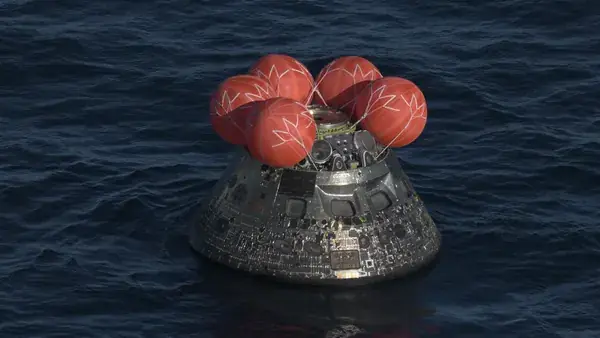
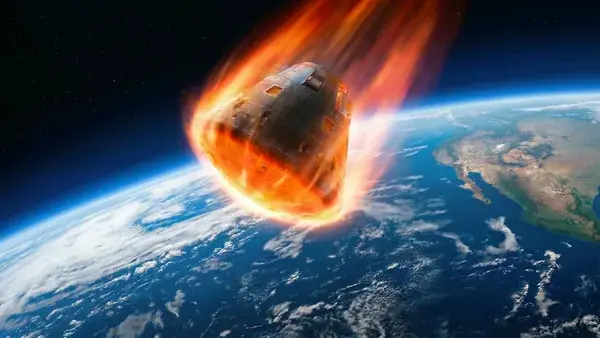
Artemis II launched from Kennedy Space Center on 1 April 2026. The mission was a ten-day crewed test flight, not a landing. Orion looped around the moon on a free-return trajectory, using lunar gravity to slingshot back toward Earth, with splashdown off San Diego on 10 April. Proving that the systems work, that humans can survive the journey out and back, was the entire point. History will probably call it more than that. The mission flew with a heat shield that several engineers were still arguing about on the morning of launch. NASA reviewed the concerns, conducted additional testing, and chose to fly anyway on a modified re-entry profile designed to reduce the thermal load. The shield held, which is not a detail that disappears quietly into the engineering record.
Why Artemis II Matters
Artemis II mattered because it was the first crewed mission beyond Earth orbit since Apollo 17 in 1972. More than a symbolic return to deep space, it was a full test of the Orion spacecraft, the Space Launch System rocket and the procedures that future lunar crews will depend upon. If Artemis II had failed, Artemis III and any plans for a sustained human presence on the moon would have been delayed for years. By completing the mission successfully, NASA demonstrated that humans can once again travel to the moon and return safely, something no space agency had achieved for more than half a century.
Who Were the Artemis II Crew?
Victor Glover became the first Black astronaut to journey beyond low Earth orbit and Christina Koch was the first woman to fly around the moon. Hansen's distinction was national rather than demographic, first Canadian beyond Earth orbit, but all three firsts landed in the same ten-day window, which is the kind of thing that gets a footnote in history books and a paragraph in the press release, and deserves rather more than either. Reid Wiseman commanded. Koch told NASA administrator Jared Isaacman afterwards she was not ready to go home, and people have been repeating that line ever since.
What Did the Artemis II Crew Do During the Lunar Flyby?
The seven-hour lunar observation period was not a formality. Scientists at Mission Control had prepared thirty-five geological targets, and the crew worked through them in pairs, photographing and describing surface features in real time. Human eyes catch things satellites miss, colour variations, subtle brightness shifts across the surface, and that was the point. One key target was the Orientale Basin, a 600-mile-wide impact crater straddling the boundary between the near and far sides. Wiseman described its annular ring from an angle no camera had previously matched. Kelsey Young, the lunar science lead, had predicted the team would be buzzing. From the sound of the Science Evaluation Room, that was not an overestimate.
Wiseman also captured some of it on his iPhone, holding the screen up to a camera so Mission Control could see. That detail keeps coming back more than the records do, more than the science objectives. A man, a quarter million miles from home, taking photos on his phone.
Earthrise, Earthset and the Artemis II Eclipse
At 6:44 p.m. EDT, Orion passed behind the moon and the signal died. Forty minutes of silence, among the longest blackouts in human spaceflight history. During it the crew witnessed Earthset, Earth dropping below the lunar horizon and simply gone. Orion came back round and there was Earthrise. The ground saw none of it.
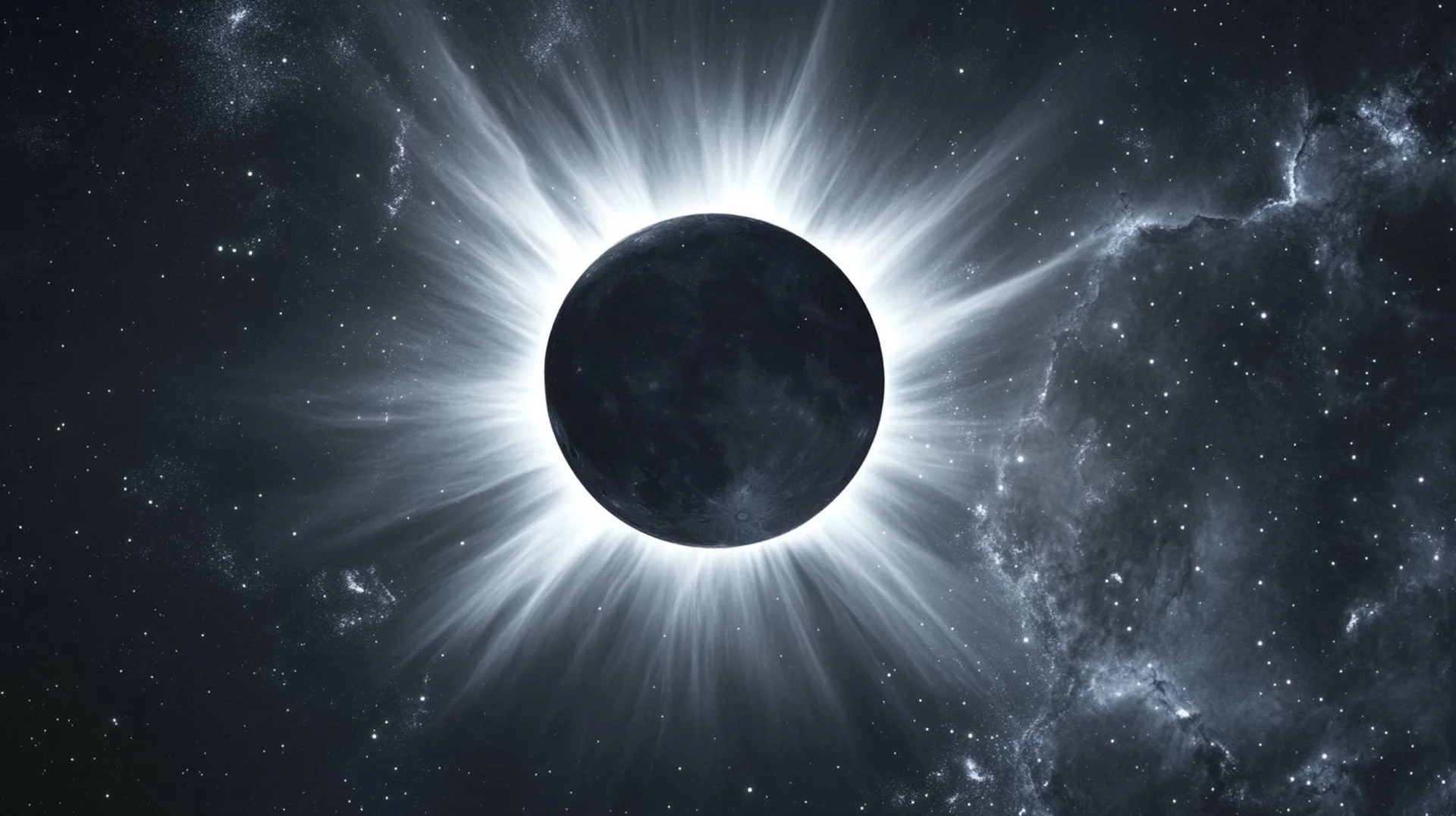
The crew also witnessed a solar eclipse during the blackout, the sun moving behind the moon from Orion's perspective and the solar corona blazing into view for nearly an hour. That event has its own piece on this site. The short version is that what the crew saw from that position has not been seen by any human since the Apollo programme ended.
What Comes Next After Artemis II?
Orion splashed down off San Diego on 10 April. After that: the spacecraft examined, the heat shield pulled apart for inspection, the data handed to whoever decides what follows. Artemis III, the first crewed lunar landing mission of the Artemis programme, is targeted for 2027. Whether the heat shield can be redesigned and certified in that window is the question nobody is answering directly.
What Artemis II settled is that the hardware can get four people to the moon and bring them home. Everything that follows from that is still open. The long-term future of humanity may ultimately depend on becoming a multi-planet species, because Earth itself will not remain habitable forever as the Sun continues its evolution.
Artemis II vs Apollo: What's Different?
Comparisons with Apollo are inevitable, but Artemis is not simply a repeat of the 1960s programme. Apollo was driven by Cold War competition and focused on reaching the moon first. Artemis is intended to establish a longer-term presence beyond Earth, with future missions supporting lunar bases and eventual journeys to Mars. The spacecraft are also vastly different. Apollo relied on the Saturn V rocket and computers less powerful than a modern calculator, while Artemis uses the Space Launch System and Orion spacecraft, combining modern materials, navigation systems and communications technology with lessons learned from the original moon programme.
The Artemis II Series
Frequently Asked Questions
When did Artemis II launch?
Artemis II launched from Kennedy Space Center on 1 April 2026, carrying four astronauts on a ten-day crewed lunar flyby mission.
Who were the Artemis II crew?
The Artemis II crew were Reid Wiseman, Victor Glover, Christina Koch and Jeremy Hansen. Glover was the first Black astronaut to travel beyond low Earth orbit. Koch was the first woman to complete a lunar flyby. Hansen was the first Canadian to travel beyond Earth orbit.
How far did Artemis II travel from Earth?
Artemis II reached a maximum distance of 252,756 miles from Earth on 6 April 2026, breaking the distance record set by Apollo 13 in 1970.
Did Artemis II land on the moon?
No. Artemis II was a crewed test flight, not a landing mission. The crew flew around the moon on a free-return trajectory and splashed down in the Pacific Ocean off San Diego on 10 April 2026.
◆ Also In The Stars

◆ Go Deeper
Recommended
A Man on the Moon: The Voyages of the Apollo Astronauts
Amazon ↗
Carrying the Fire: An Astronaut's Journeys
Amazon ↗
The Last Man on the Moon
Amazon ↗
Affiliate links — we may earn a small commission at no cost to you.