A total solar eclipse on 6 April 2026, visible to exactly four people. The corona blazed for nearly an hour, fifteen times longer than anyone gets from the ground.
Artemis II Eclipse: The Solar Eclipse Nobody on Earth Could See
◆ In Summary
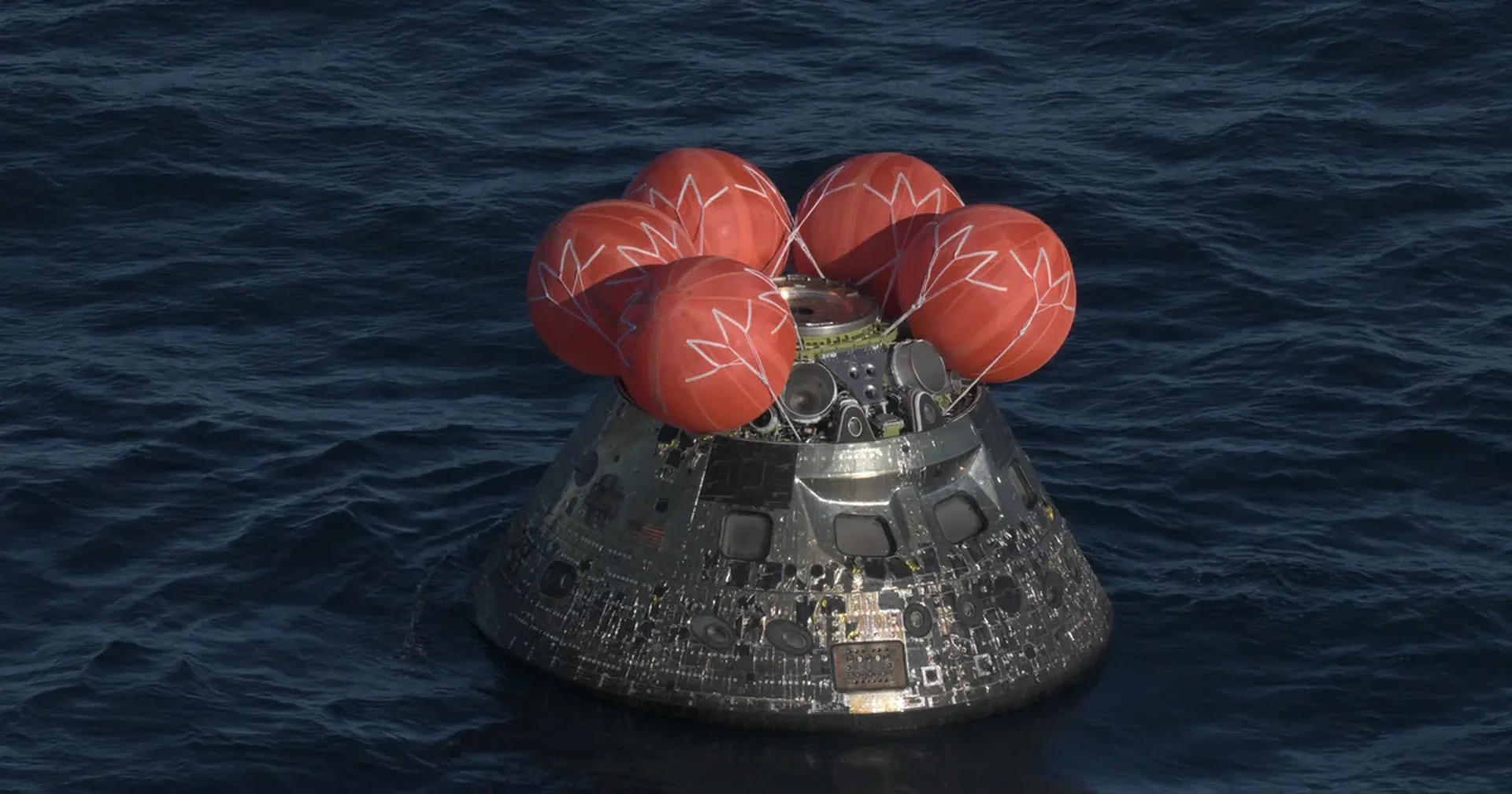
On 6 April 2026, the Artemis II crew witnessed a total solar eclipse from beyond the moon, observing the solar corona for nearly an hour. Nobody on Earth could see it. The last humans to occupy that position were the Apollo astronauts in 1972.
◆ At a Glance
| Eclipse date | 6 April 2026 |
| Duration of totality | Nearly one hour |
| Earth-based totality | Two to three minutes maximum |
| Last humans at this position | Apollo programme, December 1972 |
| Communications blackout | 40 minutes |
| Corona temperature | Hotter than the solar surface |
| Saros cycle | 18-year repeating eclipse pattern |
| Saros origin | Babylonian astronomers |
The Artemis II Eclipse Nobody Could See
Sometimes, Brits plan their holidays around solar eclipses (yes I mean me!). The 1999 total eclipse converted some of us, dragging otherwise sensible adults to cold, muddy fields across Cornwall and the southern tip of Devon to wait for two minutes of darkness. Most of them said it was worth it, even the ones who saw nothing but cloud (me again!). There is something about the experience that does not respond well to being told about secondhand.
On 6 April 2026, the Artemis II eclipse became visible from a place no human had occupied since 1972, while remaining invisible to everyone on Earth.
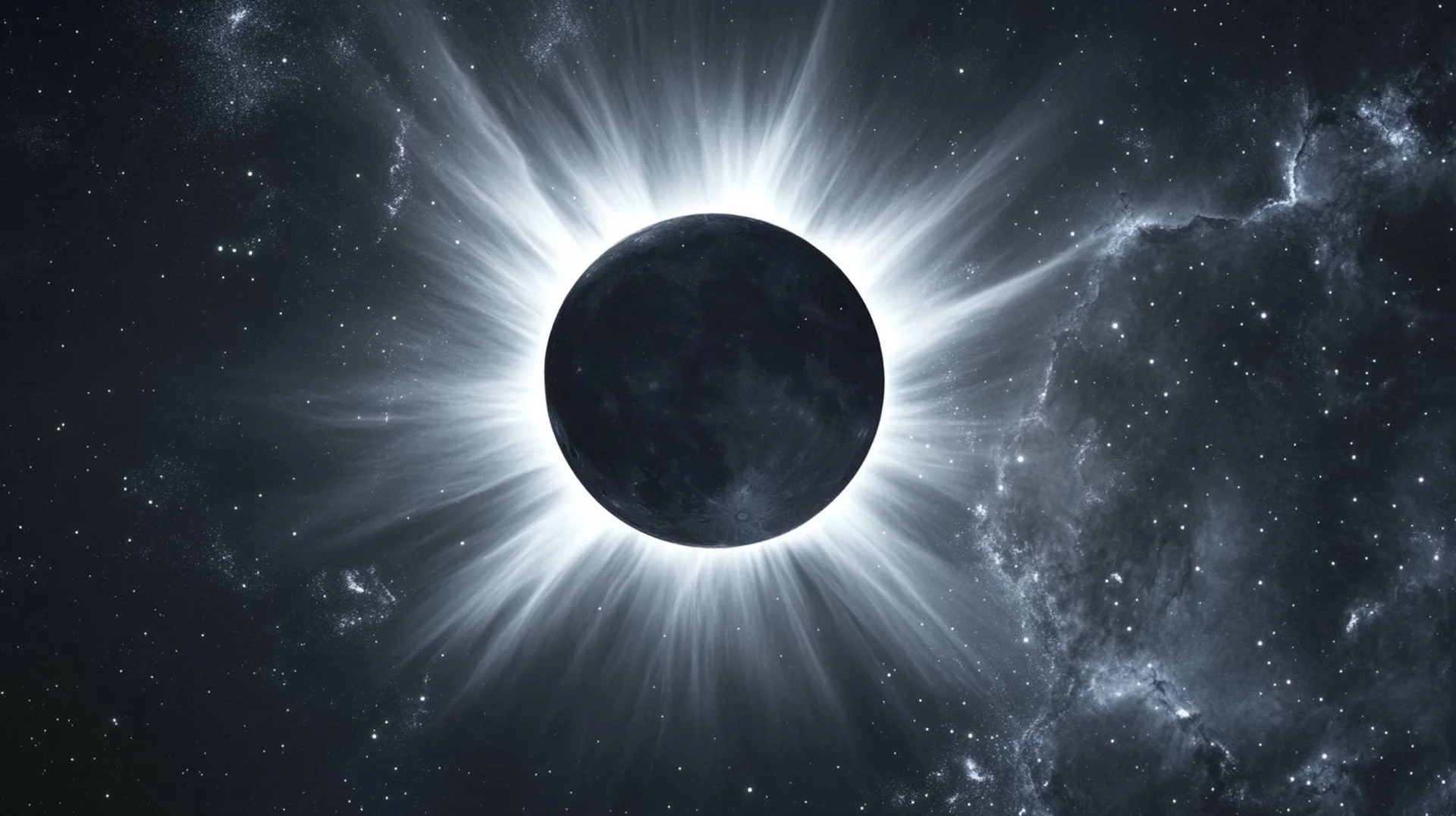
As the Artemis II crew completed their lunar flyby on 6 April, the sun moved behind the moon from the perspective of the Orion spacecraft, producing a total solar eclipse lasting nearly an hour. During this period the crew observed the solar corona, the outermost atmosphere of the sun, which is only visible during totality. They also searched for meteoroid impacts on the lunar surface, observed dust above the lunar horizon and looked toward deep space targets including planets.
This eclipse occured in a location no human being has occupied since December 1972. The Apollo astronauts who flew around the moon during that programme would have had similar views on certain missions, though the geometry does not always align. What happened was, in practical terms, a private showing. Four people get to see it. The other eight billion of us do not.
There is something genuinely strange about that if you think about it for long enough.
What Eclipses Have Always Meant
Eclipses have carried enormous weight in human culture across every civilisation that has recorded them. The Babylonians predicted them centuries in advance using mathematical cycles they called the Saros, an 18-year repeating pattern that allowed them to forecast exactly when the moon's shadow would fall across specific regions of the Earth. They were not doing this out of idle curiosity. Eclipses were read as messages. The temporary disappearance of the sun was, in virtually every ancient tradition, a moment when the boundary between the ordinary world and whatever lay beyond it became thin.
Chinese court astronomers who failed to predict an eclipse were, in certain dynasties, executed. The stakes attached to reading the sky correctly were not metaphorical. The Aztec calendar revolved partly around eclipse prediction. Greek historians record that a solar eclipse in 585 BC, predicted by Thales of Miletus, stopped a battle between the Lydians and the Medes because both sides took it as a sign from the gods that the fighting should cease. An eclipse literally ended a war.
Medieval European astrologers catalogued every eclipse with meticulous care, cross-referencing them with political upheavals, plagues and the deaths of rulers. The underlying belief, held across cultures that had no contact with each other, was consistent: the sun going dark was not a coincidence. It meant something. The sky was communicating something that attentive observers could learn to read.
When the Science Doesn't Kill the Awe
Modern astronomy has, of course, replaced that framework with orbital mechanics. We know exactly why eclipses happen and can predict them to the second centuries in advance. The mystery is gone, or at least the explanatory mystery is. What remains, for anyone who has actually stood in the path of totality, is something that resists purely rational description. The temperature drops. Animals behave strangely. The horizon glows in all directions simultaneously with the colours of a 360-degree sunset. The corona blazes around the black disc of the moon in a way that no photograph adequately captures. The experience, even for people who understand completely what is happening and why, tends to produce something that feels very much like awe.
What the Crew Actually Saw
The Artemis II crew experienced a version of that on 6th April. A private version, from an altitude no human has occupied in more than fifty years, with the Earth hanging in the darkness behind them and the sun disappearing behind a moon they were close enough to photograph in detail. The crew had already been photographing the moon since day four of the mission, capturing images of the Orientale basin, a vast multi-ring impact crater on the lunar far side that serves as a scientific baseline for comparing impact craters across the solar system from Mercury to Pluto. It is the first time humans have observed this feature from multiple angles directly.
They are, in other words, doing genuine science while also doing something that feels mythological.
The Corona Problem
The solar corona, which the crew observed during the eclipse, is one of the stranger features of our sun. It is also a reminder that the sun itself is not permanent. Like all stars, it will eventually exhaust its fuel, expand into a red giant and enter the final stages of its life.
The corona is the outermost layer of the solar atmosphere, extending millions of kilometres into space, and it is significantly hotter than the surface below it, which is the opposite of what basic physics would suggest and which scientists have been trying to explain properly for decades. It is visible from Earth during total eclipses but only briefly, for the two or three minutes of totality that a ground-based observer gets. The Artemis II crew had nearly an hour.
The Artemis II Series
Frequently Asked Questions
What did the Artemis II crew see during the lunar blackout?
During the 40-minute communications blackout on 6 April 2026, the Artemis II crew witnessed Earthset, Earthrise and a total solar eclipse, observing the solar corona for nearly an hour from a position no human had occupied since the Apollo programme ended in 1972.
How long did the Artemis II solar eclipse last?
The solar eclipse observed by the Artemis II crew lasted nearly an hour, significantly longer than the two to three minutes of totality available to observers on Earth during a ground-based total eclipse.
What is the solar corona?
The solar corona is the outermost layer of the sun's atmosphere, extending millions of kilometres into space. It is only visible during a total solar eclipse when the moon blocks the sun's disc. Despite being further from the sun's surface, the corona is significantly hotter than the surface itself, a phenomenon scientists have been working to explain for decades.
What is the Saros cycle?
The Saros cycle is an 18-year repeating pattern used to predict solar eclipses, first identified by Babylonian astronomers centuries before modern astronomy. Each cycle produces eclipses of similar geometry, allowing precise forecasting of when and where the moon's shadow will fall.
Why could nobody on Earth see the Artemis II eclipse?
The eclipse was only visible from the position of the Orion spacecraft during its lunar flyby. From Earth's surface, the geometry of the sun, moon and Earth did not align to produce a visible eclipse on that date.
◆ Also In The Stars
◆ Go Deeper
Recommended
Sky Gazing: A Guide to the Moon, Sun, Planets, Stars, Eclipses, and Constellations
Amazon ↗
Philip's Guide to the Night Sky
Amazon ↗
100 Things to See in the Night Sky
Amazon ↗
Affiliate links — we may earn a small commission at no cost to you.