England's most famous prophetess may never have spoken the words that made her legendary. Five centuries of folklore, tourism, forgery and wishful thinking have transformed a shadowy Yorkshire woman into a national seer.
◆ In Summary
Mother Shipton is England's most famous prophetess. She may or may not have existed. Most of her celebrated predictions were fabricated by a Victorian writer who later admitted it in print. The admission changed nothing. The legend has been running for five centuries and shows no sign of slowing down.
It didn't take me long to choose the next seer to research after Nostradamus. Mother Shipton is probably my country's most famous seer and her hometown is a popular tourist attraction to this day, more than five centuries after her alleged birth. I can't say I've visited Mother Shipton's Cave in Knaresborough, but my mother has and says it's wonderful. Whether that makes me the wrong person to write about England's most famous prophetess, or exactly the right one, I'll leave for you to answer.
The Woman Behind the Legend
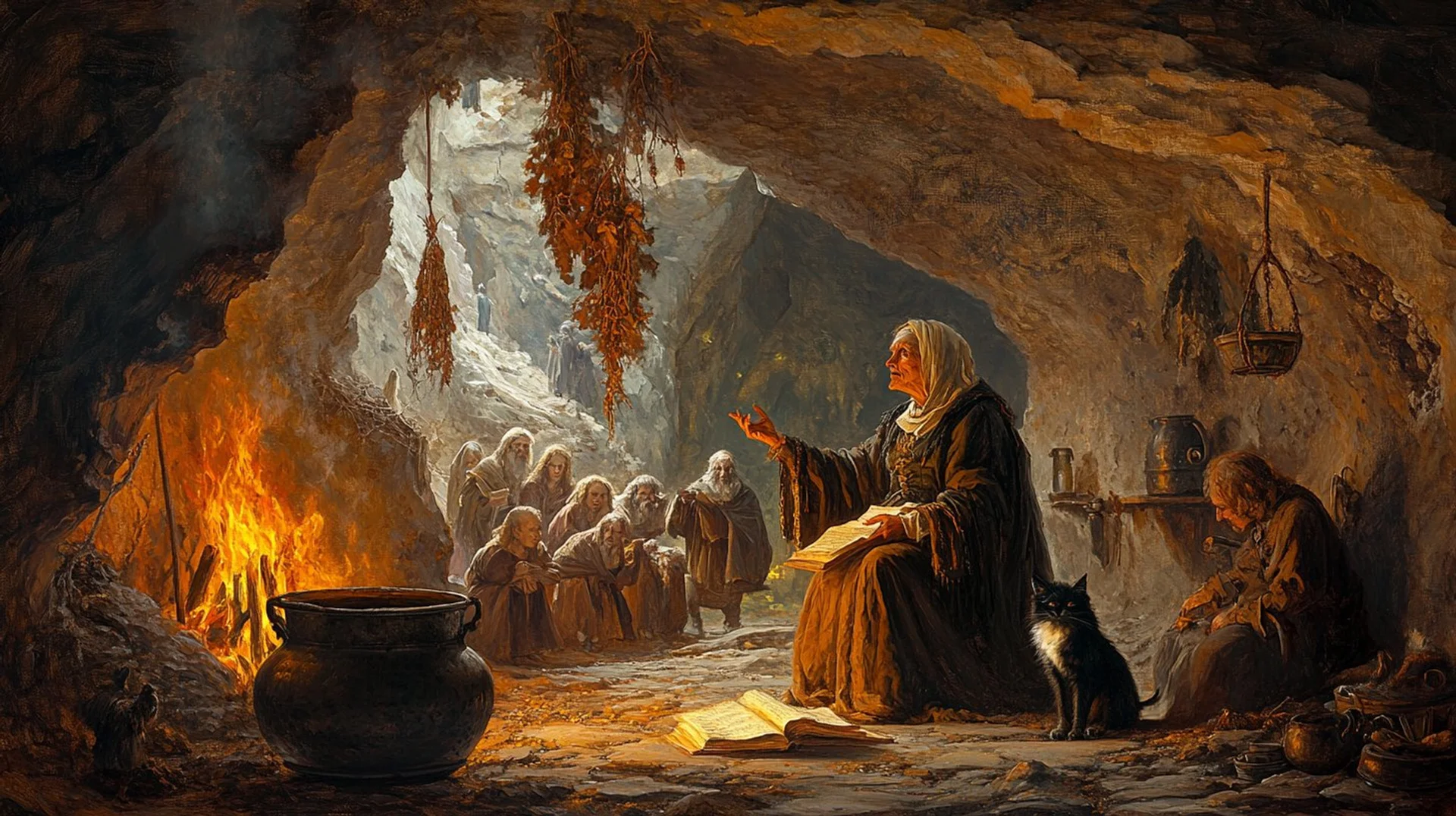
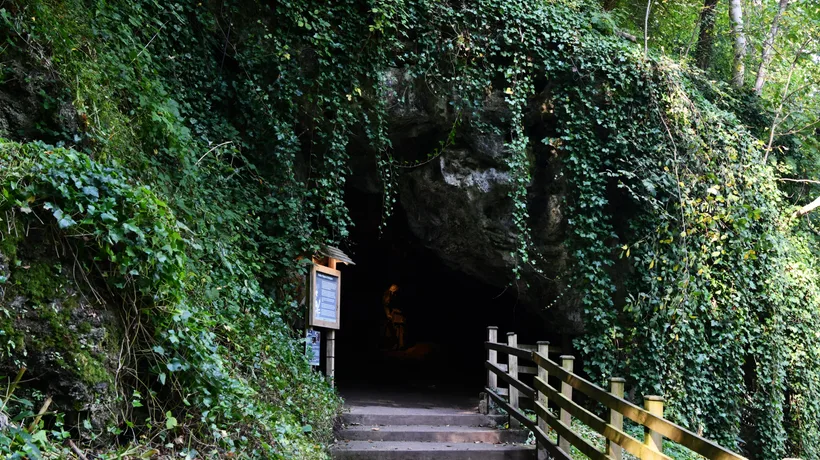
Ursula Southeil was supposedly born in this cave beside the River Nidd in 1488. Some accounts say Ursula's mother died shortly after childbirth, others that she was taken in by a local family or given shelter by kindly nuns. As is often the case with Ursula, the details depend entirely on which version of the legend you are reading.
A short walk from the cave is the Petrifying Well, a natural spring so rich in minerals that it gradually coats objects hung beneath it in a stone-like deposit. John Wayne's hat is among the objects that have been petrified there. It is displayed in the site museum, alongside other curios including Agatha Christie's handbag. People have apparently been finding it irresistible since at least the 17th century. The site claims to be England's oldest tourist attraction. Whether any of it bears much resemblance to the woman who actually lived there is, to put it mildly, an open question.
She reportedly married a carpenter named Toby Shipton around 1512, and spent the rest of her life in Yorkshire making predictions that her neighbours found unsettling and posterity has found endlessly malleable. She died, according to the legend, in 1561. The contemporary record, however, has nothing to say about any of it. Not a single document from her supposed lifetime mentions her by name.
The historical record is thin, but that is arguably beside the point. Mother Shipton has survived five centuries not because her biography is well evidenced, but because the myth is irresistible. The prophecies are the thing, or rather, the idea of the prophecies. She is said to have foretold the Spanish Armada, the Great Fire of London and the Great Plague, among other things. How many of those claims survive scrutiny is a different question entirely. Myths tend not to need facts.
The Prophecies of Mother Shipton
The prophecies themselves are where things get genuinely complicated. The verses most commonly associated with Mother Shipton, the ones that get quoted in books and websites about her with breathless confidence, were largely fabricated. The most famous collection, which includes apparent predictions of carriages without horses, iron in water, men flying through the air and thoughts travelling around the world, first appeared in a book published in 1862 by Charles Hindley. Hindley subsequently admitted he had made them up. He admitted this in print, in 1873, in a letter to a journal called Notes and Queries.
The admission made almost no difference whatsoever to the popularity or circulation of the prophecies, which continued to be reproduced and cited as genuine throughout the 20th century and continue to appear on the internet today presented as authentic 16th century verse. This is, to put it plainly, how prophecy works as a cultural phenomenon. The debunking never travels as far as the original claim.
The earlier, more plausibly genuine prophecies are considerably less spectacular. They tend to deal with local Yorkshire matters, political events of the Tudor period, the fates of specific named individuals. Cardinal Wolsey, who never actually visited York despite apparently intending to, features in several of them, with Shipton allegedly predicting he would see the city but never reach it. Wolsey did indeed view York from a distance and then turned back, though the prophecy recording this prediction conveniently appears after the event rather than before it. Anyone who has spent time with Nostradamus will recognise the pattern. The earlier verses are interesting precisely because they are modest. They feel like the work of someone with local knowledge and political shrewdness rather than supernatural insight. Which is, of course, exactly what surviving Tudor England required of a woman in her position.
Witch, Wise Woman or Folk Hero?
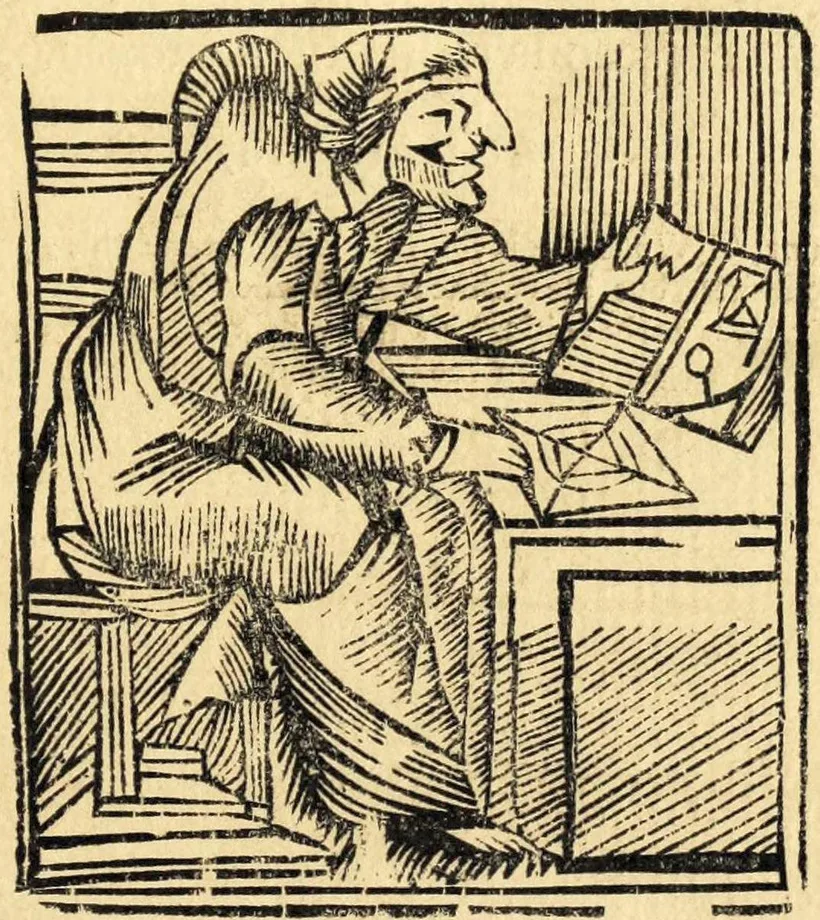
The physical descriptions make that point more bluntly than any historical argument could. She is consistently described as having a large crooked nose, a hunched back, deep-set eyes and a generally alarming appearance. This is, almost to the point of parody, the standard visual vocabulary for a witch in early modern England. Whether Ursula Southeil actually looked like this is unknowable, and probably beside the point. The descriptions tell us less about her than about the cultural template into which she was being fitted. Women who operated outside conventional social structures, who were consulted for advice and predictions, who had knowledge that others lacked, were routinely described in these terms. It served a purpose. Explaining the inexplicable, in other words, while making sure it stayed at arm's length. The remarkable thing is that it worked. She was never, as far as the historical record shows, formally accused of witchcraft.
The 16th and 17th centuries saw witch trials across England with considerable regularity and a woman with her reputation might reasonably have expected to attract that kind of attention. The fact that she apparently did not suggests either that the community found her useful enough to protect, that she was careful enough to operate within tolerable limits, or simply that the historical accounts of her reputation were exaggerated considerably after her death when there was no longer any risk attached to the exaggeration. Possibly all three.
The Victorian Reinvention
The Victorian reinvention of Mother Shipton is, in many ways, more interesting than the original legend. The 19th century had an insatiable appetite for ancient wisdom and, in particular, prophecy. The idea that the past had somehow foreseen the extraordinary technological changes that were reshaping their world was intriguing and also reassuring. Railways, telegraphs and steam power, all advances so astonishing to the people living through them that the past suddenly seemed like it might hold answers to where this was all heading. Hindley's fabricated verses arrived at exactly the right cultural moment. They told people what they wanted to hear, that the modern world was not an accident, not a chaos of unpredictable change, but something that had been written in advance by a wise woman in a Yorkshire cave. That is a comforting thought. It is also, unfortunately, completely wrong.
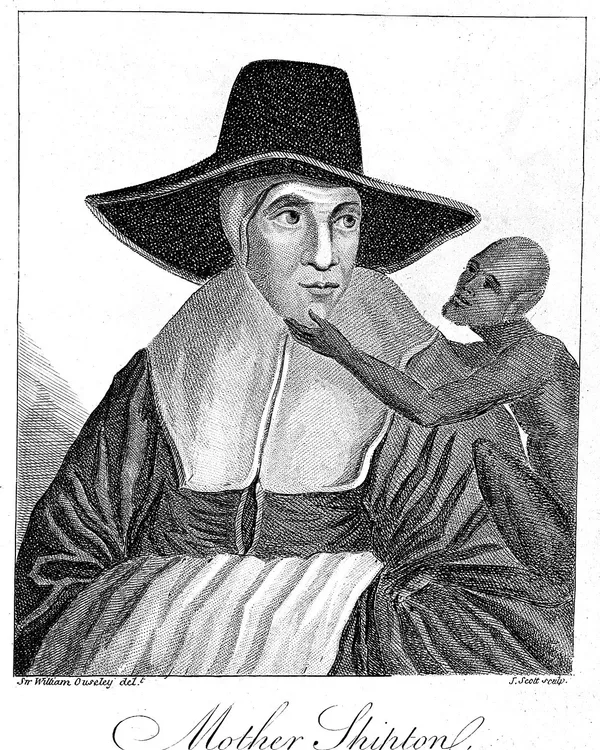
What the Victorian period also did was to cement Mother Shipton as a specifically English folk figure in a way that she had not quite been before. She became part of a national mythology, a counterpart to Merlin in some tellings, a voice of native English wisdom set against foreign influences and classical learning. There were plays about her, popular prints depicting her cave, and the birth of a tourist trade around Knaresborough.
The end of the world prophecy is the one that surfaces most reliably whenever Mother Shipton's name comes up in popular culture. The verse in question predicts that the world will end when a particular sequence of events has unfolded; it has been applied to roughly every decade since the 1800s with unfailing optimism. In 1881 people in parts of England genuinely prepared for the end. Some left their houses. Some spent the night in churches. And then it didn't happen.
The prophecy was then reinterpreted, the relevant verse found to have been misread, and the whole exercise began again with a new date. This cycle of prediction, failure and quiet reinterpretation has its own academic literature, which tells you something about how consistent it is. Leon Festinger studied a doomsday cult in the 1950s and came away with a finding that should surprise nobody who has spent time with prophecy. When the predicted end failed to arrive, believers did not abandon their faith. They doubled down. Mother Shipton's end of the world prophecy has been through this process more times than anyone has bothered to count. It will almost certainly go through it again.
The specific verse most often quoted runs something like: the world to an end shall come, in eighteen hundred and eighty one. The rhyme only works in Victorian English, which is itself a clue about when it was actually written. When it didn't come to pass, subsequent versions changed the date, or disputed the reading, or produced new manuscripts that had apparently been overlooked. Hindley's ten or so fake prophecies, once they entered circulation, took on a life of their own. Fake prophecies, it turns out, are just as culturally durable as real ones. Perhaps more so, because they can be adjusted.
Why Mother Shipton Still Matters
What should we make of Mother Shipton and her story? Was she a real woman, a fabrication or a bit of both? Honestly, probably some version of all three. A woman called Ursula Southeil could have been around at the time Mother Shipton is said to have been born. This woman perhaps had a reputation for wise counsel and predictions. Nobody would have looked twice. Women in this role were common across rural England at the time, most of them forgotten within a generation. They watched, they remembered, and they noticed things that other people missed. Most of them are completely invisible to history now.
Ursula Southeil at least has a name, which is more than most of them got. She did not write her own story, rather others wrote it for her, and have been rewriting it ever since. Nostradamus, whatever you make of his quatrains, at least put his name to his own words. Ursula never got that chance. Whether she existed at all is, at this point, almost a secondary concern.
The prophecies that bear her name tell us almost nothing reliable about what she actually said or believed. That is the wrong place to look. What they tell us instead is what successive generations of English people needed to believe about the past. They needed a native prophetess, a voice of ancient wisdom, a woman who had seen their world coming and found it unremarkable. That need has not gone away. Mother Shipton's cave is still open to visitors and the gift shop is still doing a reasonable trade. And somewhere on the internet, right now, someone is reading the Hindley fabrications and nodding along, absolutely certain they are reading the authentic words of a Yorkshire wise woman from 1488. She would have found that either gratifying or deeply irritating. Possibly both.
Frequently Asked Questions
Who was Mother Shipton?
Mother Shipton was a legendary English prophetess traditionally identified as Ursula Southeil, said to have been born in a cave near Knaresborough in Yorkshire around 1488. No contemporary documents mention her by name. Much of her story was constructed and embellished over the centuries that followed her supposed lifetime.
Did Mother Shipton really predict the future?
The most famous prophecies attributed to Mother Shipton, including apparent predictions of railways, telegraphs and flying machines, were fabricated by a Victorian writer named Charles Hindley and published in 1862. Hindley admitted this in print in 1873. The admission had almost no effect on the circulation of the prophecies, which continue to be presented as authentic today.
Was Mother Shipton a real person?
Historians cannot confirm she existed. A woman named Ursula Southeil may have lived near Knaresborough in the late 15th and early 16th centuries, but no record from her supposed lifetime survives. The earliest written accounts of her life and prophecies appeared decades after her alleged death.
Where is Mother Shipton's Cave?
Mother Shipton's Cave is in Knaresborough, North Yorkshire, beside the River Nidd. The site also includes the Petrifying Well, a mineral-rich spring that gradually coats objects left beneath it in a stone-like deposit. It claims to be England's oldest tourist attraction and remains open to visitors.
What was Mother Shipton's real name?
Mother Shipton is traditionally identified as Ursula Southeil, born around 1488 near Knaresborough in Yorkshire. She married a carpenter named Toby Shipton around 1512 and spent the rest of her life in Yorkshire. No document from her lifetime confirms any of this.
◆ Also In The Stars
◆ Go Deeper
Recommended
Affiliate links — we may earn a small commission at no cost to you.