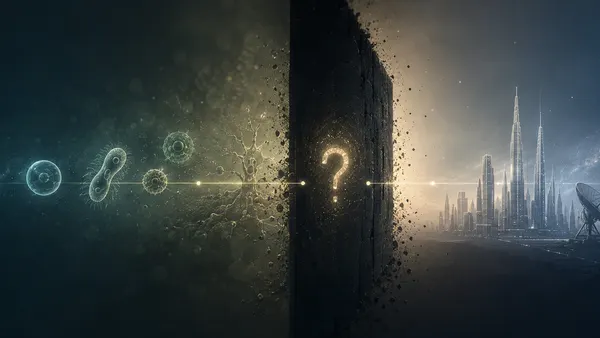
The story of Copernicus is usually told as a sudden revolution. In reality it began with family tragedy, an ambitious uncle, and three decades of quiet study before the Earth ever moved from the centre of the universe.
◆ In Summary
Nicolaus Copernicus is remembered for placing the Sun at the centre of the cosmos, but that idea emerged slowly. Before becoming the architect of the heliocentric model, he was a church administrator, physician, lawyer and economist. His early life was shaped by family tragedy, an ambitious uncle and decades of study that gradually convinced him the accepted picture of the universe was wrong.
This is the first in a series of articles on Nicolaus Copernicus. I should say upfront that it is not the story most people expect. The version where a lone genius defies the Church and rewrites the cosmos overnight is a good story. It is also, in most of its details, wrong.
The Origins of Copernicus
Copernicus was born in 1473 in Toruń, a Royal Prussian merchant town on the Vistula river. Royal Prussia’s governance was a curious arrangement, though not an uncommon one for the time: semi-autonomous but answerable to the Polish crown. The German-speaking merchant class was content enough with the arrangement so long as nobody interfered with its trading rights. Polish and German scholars have been arguing about who gets to claim him ever since, and both sides have a point. What isn't up for debate is that Toruń produced one of the most consequential minds in the history of science and the city knows it: an impressive bronze statue of Copernicus in academic robes has stood in the market square since 1853.
His father, also named Nicolaus Copernicus, was a copper merchant. It seems he was successful enough in his trade to provide his family (Nicolaus and his three older siblings Andreas, Barbara and Katharina) with a very comfortable existence, even after the death of his wife Barbara, mother of his four children, in the late 1470s. He had only a few years left himself. He died in 1483 when Nicolaus was just ten years old. This sudden rupture set in motion a sequence of events that would eventually move the Earth itself. The children's maternal uncle, Lucas Watzenrode, took them in. He was childless, a churchman of considerable ambition (destined to become Bishop of Warmia) and not a man given to purely sentimental gestures. He had plans for all four children. For his nieces, that meant a convent for Barbara and a suitable marriage for Katharina. For his nephews, he had larger ambitions entirely.
For Copernicus, Watzenrode's ambitions meant the church. The church was where educated men built careers in fifteenth-century Prussia and Watzenrode had the connections to open every door. A canonry at Frombork Cathedral was the eventual destination, a position that would provide income, status, and enough administrative responsibility to keep a man occupied for a lifetime. What Watzenrode could not have foreseen was what his nephew would do with the time left over.
Kraków and the First Doubts
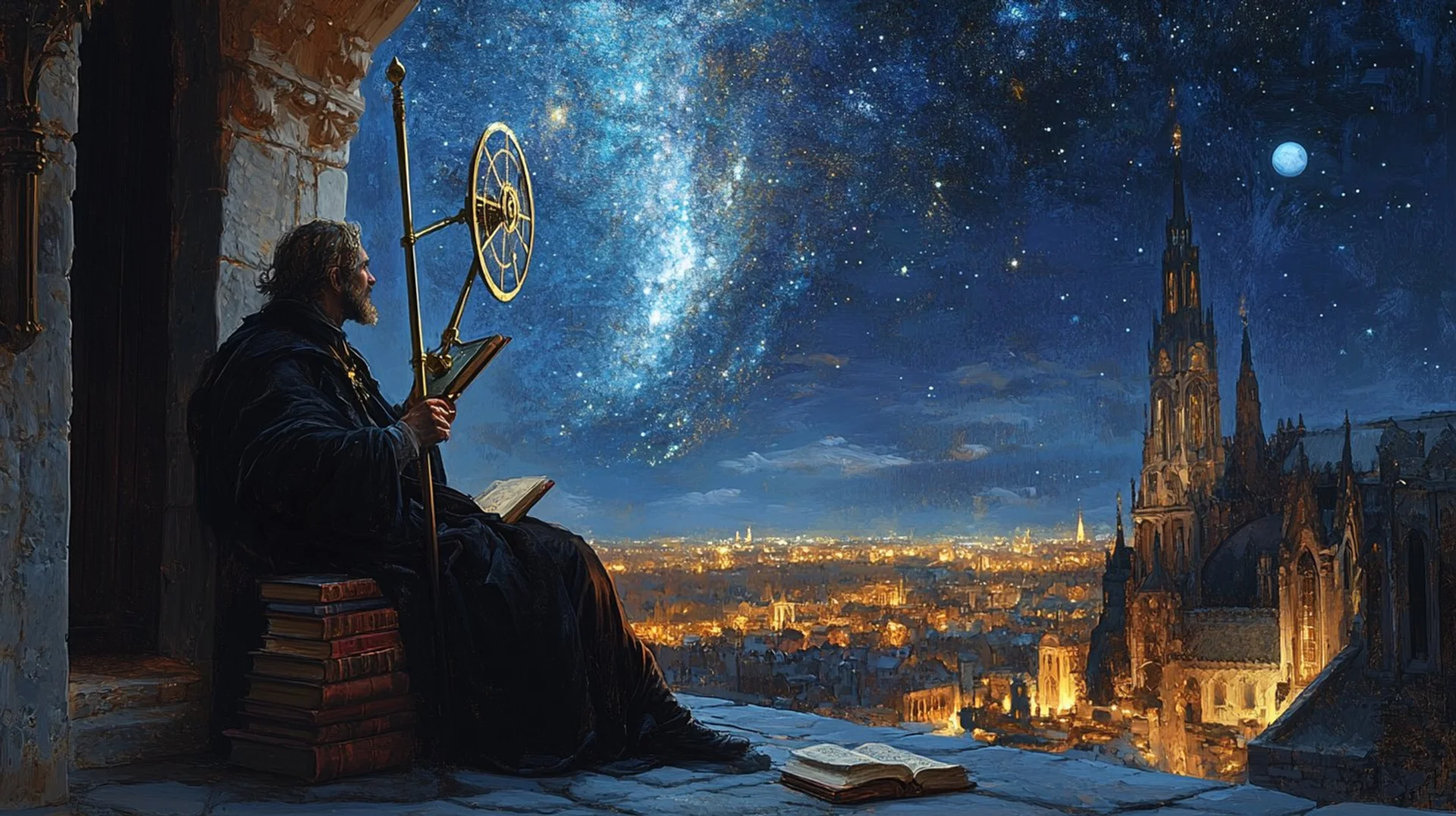
In 1491, aged eighteen, Copernicus enrolled at the Jagiellonian University in Kraków. The mathematics and astronomy departments were among the best in central Europe, and something about that environment started to loosen his thinking. Nothing close to a theory, rather a dissatisfaction with the current way of thinking. The model of the cosmos that everyone accepted, the Earth at the centre, the planets and sun moving around it in complex patterns of circles within circles, worked up to a point. Its predictions were close enough for most purposes. But close enough wasn't good enough for Copernicus. He knew there were problems with the standard scientific framework and he was determined to understand why.
He was also studying medicine, law, and the liberal arts simultaneously, because the Jagiellonian University in the 1490s expected its students to be serious about several things at once. Copernicus took this notion to heart. He would practice medicine for decades without ever holding a formal medical degree. He would write a treatise on monetary reform that anticipated principles later associated with monetary theory centuries afterward. He would administer church estates, negotiate with creditors, and manage the practical affairs of a cathedral chapter with the competence of a man who had never thought about anything else. The astronomy was always there, but Kraków could only take him so far. What he needed next was a higher level of teaching and expertise that he could only find in Italy.
Italy and the Commentariolus
Following the well-trodden path of ambitious young men of his class and era, Copernicus travelled to Bologna first, then Padua, then Ferrara. He deepened his knowledge in law, medicine and in particular astronomy, studying under Domenico Maria Novara, one of the leading astronomers of the day. Novara was already uneasy about the received model of the cosmos, the feeling that the numbers and the sky were not quite agreeing with each other as reliably as everyone pretended. Copernicus absorbed that unease. His observations and calculations were becoming harder to reconcile with what everyone else accepted as settled.
He came back to Royal Prussia in 1503, aged thirty, with a doctorate in canon law from Ferrara and a set of ideas about the universe he had not shared with anyone. His uncle installed him as personal physician and secretary. There were estates to administer, creditors to negotiate with, diplomatic missions to survive. Watzenrode died in 1512 and left a gap that Copernicus filled with more administrative duties rather than fewer. The notebooks stayed closed.
The Theory He Would Not Publish
What strikes me most about this period is how thoroughly it resists the standard revolutionary narrative. No single moment of clarity survives in the record. No letter where he announces he has worked it out. Just a man, a job, and a problem he would not let go of. By around 1510, he had written a short manuscript, the Commentariolus, setting out the basic outlines of a sun-centred cosmos. He circulated it privately among a small number of trusted readers. He did not publish it.
He would not publish the full theory for another thirty years. The reasons for that delay are part of what makes the story interesting, and they are not quite what the popular version suggests. It was not simply fear of the Church, though that is the explanation that has hardened into legend. It was something more complicated, more human. That is where Part Two picks up.
Frequently Asked Questions
Who was Nicolaus Copernicus?
Nicolaus Copernicus was a Renaissance astronomer, mathematician and church administrator best known for proposing that the Earth and planets orbit the Sun rather than the other way around.
What did Copernicus discover?
Copernicus did not discover that the Earth moves around the Sun in the modern scientific sense, but he was the first person to develop a complete mathematical model placing the Sun at the centre of the planetary system.
Was Copernicus Polish or German?
Copernicus was born in Royal Prussia, a region of the Kingdom of Poland with a large German-speaking population. Both Polish and German traditions have claimed him, and modern historians generally regard him as a product of a multicultural border region rather than belonging exclusively to either nation.
What was the Commentariolus?
The Commentariolus was a short manuscript written by Copernicus around 1510. It outlined the basic principles of his heliocentric theory and circulated privately among a small group of trusted readers decades before his major work was published.
Why did Copernicus wait so long to publish his theory?
The exact reason remains uncertain. Historians point to a combination of perfectionism, a desire for stronger evidence, professional responsibilities, and concern about criticism from other scholars rather than simple fear of the Church.
◆ Also In The Stars
◆ Go Deeper
Recommended
Affiliate links — we may earn a small commission at no cost to you.