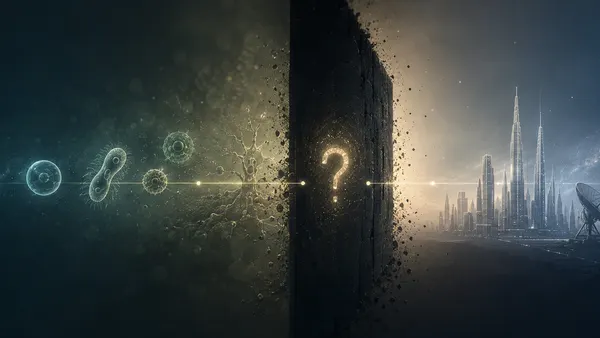
Was the Star of Bethlehem a conjunction, a nova, a comet or something else entirely? Every explanation has its supporters, yet the mystery remains remarkably difficult to resolve.
◆ In Summary
For two thousand years, readers have tried to identify the Star of Bethlehem. Astronomers have proposed conjunctions, novas, supernovas and comets. Historians have debated the chronology. Theologians have questioned whether the story was ever intended as astronomy at all. The mystery survives because every explanation solves one problem and creates another.
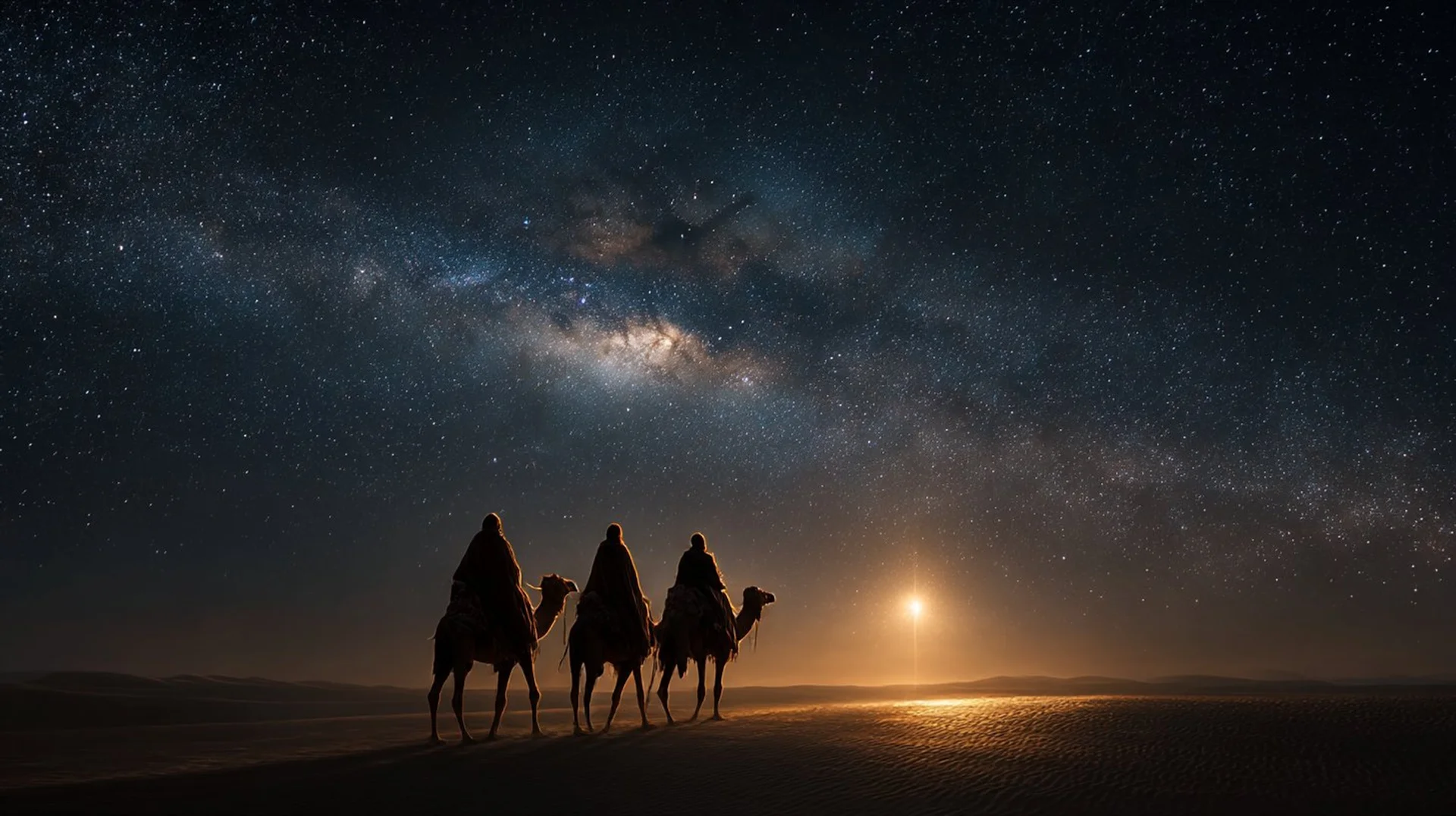
They came from the east. That is all the text says about where they started their journey. No names, and their number is never given. A new star, or something that behaved like one, compelled them to go on a search for a new king. It led them first to Jerusalem and then, after a strange detour through the court of a paranoid and dying king, to a house in Bethlehem. A young child was waiting. They left their gifts. The journey home took a different route, after a dream warning them away from Herod's court. And that is the entire account we have.
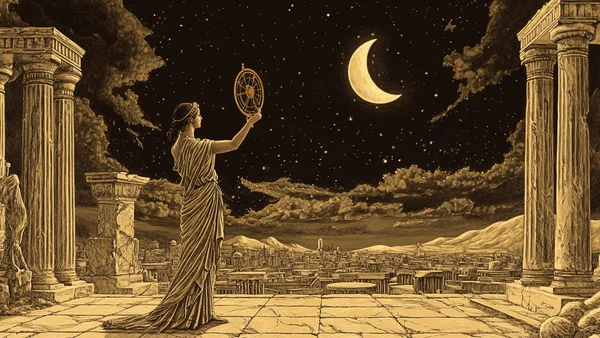
These travellers are known today as the Three Wise Men. But their motivation is the part the tradition tends to skip over. Most scholars believe they were eastern astrologers, probably from Babylon or Persia, readers of celestial signs by profession Ancient cultures invested enormous effort in understanding the heavens. Babylonian astronomers compiled centuries of observations, while the ancient Greek world eventually produced the Antikythera Mechanism, the most sophisticated astronomical device known from antiquity, capable of tracking celestial cycles with remarkable precision.
A new king implied a palace. Jerusalem was the obvious first stop, and Herod's priests and scribes pointed them toward Micah 5:2, an Old Testament prophecy naming Bethlehem specifically as the birthplace of a ruler of Israel. What happened next is where the astronomical explanations lose their footing entirely, because according to Matthew the star then moved ahead of them and stopped over a house. A conjunction (the point at which planets appear to draw close together in the sky) carries whatever meaning the observer brings to it, and the Magi found a lot of meaning in their sightings. What the star is purported to have done by moving ahead poses a question that astronomical knowledge cannot answer.
Twelve verses. That is all Matthew provides, and the tradition filled in a lot of the gaps over the centuries. The wise men are not described as kings anywhere in the original text. Their number is never given. The famous three is an inference, drawn from the three gifts. The camels are a later addition, imported from Isaiah and Psalms by artists who wanted the scene to feel suitably epic. The stable and the animals belong to Luke, not Matthew. Luke introduces the manger, because there was no room at the inn. The nativity scene most people picture is assembled from at least two different Gospel accounts that most people have never thought to separate. None of this makes the Matthew account false, just thinner than the tradition suggests.
The gifts are worth pausing on. Myrrh is the troubling one, a resin used in burial preparation, handed to a newborn. Gold signals kingship. Frankincense, divinity. Whether the Magi chose them with that symbolism already in mind, or whether theologians who knew how the story ended read it in afterwards, Matthew does not say. The text records the gifts. It does not explain them.
What Was the Star of Bethlehem? The Chronology Problem
The star itself presents the first serious difficulty, and it is not an astronomical one. It is a chronological one, and it starts with Herod. He died in 4 BC, most likely in spring of that year. That single date creates an immediate problem. If the birth occurred during his reign, as Matthew requires, Jesus was born several years before the year zero the modern calendar implies, which matters enormously, because it narrows the field of possible candidates considerably. Whatever was in the sky needs to have been spectacular enough to prompt a journey from an unspecified location in the east, and present within a window of a few years either side of 6 BC. History offers fewer candidates than the debate suggests.
The Case for Jupiter and Saturn
The most frequently cited candidate is a triple conjunction of Jupiter and Saturn in 7 BC. Three times that year the two planets drew unusually close, bright enough to arrest attention but not the single blazing point of light the story implies. Johannes Kepler thought this significant enough to publish. He was the seventeenth century astronomer who first mapped the laws of planetary motion, and when he calculated the 7 BC timing he proposed it as his explanation for the Star of Bethlehem. Pisces, where the conjunction fell, carried specific weight in Babylonian tradition, associated with the west and with the Jewish people. Jupiter meant kingship, and Saturn in some traditions was associated with the Jewish people specifically. Three meetings in Pisces, the constellation tied to Judea, would have read less like coincidence and more like a declaration to the Magi.
The Case for a Nova
In terms of sheer visibility, a nova or supernova makes the stronger case. Matthew says the Magi saw the star when it rose, and that phrasing matters. It suggests something new, not a familiar object in an unusual position. A nova fits that description. A conjunction does not. Chinese records from around 5 BC document an object that appeared where none had been before, remaining visible for over seventy days. Korean sources describe something similar. Neither account mentions a tail, which rules out a comet.
The difficulty is physical evidence, or the lack of it. No physical remnant from that period and location has been conclusively identified, which is the theory's main weakness. Surprising, given how thoroughly astronomers have looked.
Separately, Halley's Comet passed through in 12 BC, and comets were read as omens in the ancient world, almost universally bad ones. Twelve BC sits awkwardly against a nativity dated to 6 or 5 BC. Six or seven years is a long gap. Giotto di Bondone put a comet in his 1304 Adoration of the Magi having watched Halley's return three years earlier, assuming the connection was obvious. It probably was not. A fourth possibility deserves more attention than it gets. Between 3 and 2 BC, Jupiter made a series of conjunctions with Regulus in Leo before drawing close to Venus at near-maximum brightness for both planets. The combined effect would have been striking. The dating sits outside the Herod window, but the chronology of his death is genuinely disputed, and a year or two's adjustment would bring it into range.
The Problem With Every Theory
Finding a candidate for the star is one problem. What Matthew claims it did is another, and no astronomical theory touches it. Jupiter's stationary point, the moment it appears to pause before reversing its westward drift, can leave it looking fixed for several days. A traveller heading south from Jerusalem toward Bethlehem, just six miles, at the right hour would have seen Jupiter sitting directly ahead. That accounts for the stopping. It does not account for the moving, or the leading, or arriving at a specific house.
No natural astronomical object straightforwardly leads anyone to a specific address. A star or planet rises and sets with the rotation of the Earth, as all celestial objects do, and it does not hover over a particular house in a Judean town regardless of how the retrograde motion argument is extended.
The more literally the account is read, the less any astronomical explanation holds. The more metaphorically it is read, the less the astronomy matters. The Star of Bethlehem is either a theological symbol doing the work that prophecy fulfilment does throughout Matthew's Gospel, marking a significant birth with the celestial portent the ancient world expected, or it is a real event filtered through decades of oral tradition before it reached the page, its original nature simplified into something a general audience would follow. Possibly both. The astronomical candidates are genuinely interesting, and the conjunction of 7 BC and the nova of 5 BC deserve their place in the debate.
In the end the Magi are perhaps the most interesting thing in the account, not the star. They understood whatever was in the sky well enough to act on it, well enough to leave home and follow it to a house in a town they had presumably never been to before. Matthew uses them and then discards them, sending them home by a different road with nothing further to report. The star has attracted the astronomers, the theologians, everyone with a theory. The men who followed it remain almost entirely unknown. The star remained. The men who understood it disappeared into history.
Frequently Asked Questions
What was the Star of Bethlehem?
The Star of Bethlehem was the celestial sign that, according to the Gospel of Matthew, guided the Magi to the birthplace of Jesus.
Was the Star of Bethlehem a real astronomical event?
Possibly. Proposed explanations include a conjunction of Jupiter and Saturn, a nova, a supernova, or a comet, though no theory is universally accepted.
Was the Star of Bethlehem Halley's Comet?
Probably not. Halley's Comet appeared in 12 BC, several years earlier than the most likely dates for Jesus's birth.
What is the most popular explanation for the Star of Bethlehem?
The most widely discussed explanation is the triple conjunction of Jupiter and Saturn in 7 BC, first proposed by Johannes Kepler.
Did the Star of Bethlehem actually stop over a house?
According to Matthew's account it did, but no known astronomical object behaves in that way, which is why many scholars view the story as theological rather than purely astronomical.
Why did the Three Wise Men follow the star?
According to Matthew's Gospel, the Magi interpreted the star as a sign that a new king had been born in Judea and travelled west to find him.
◆ Also In The Stars

◆ Go Deeper
Recommended
Affiliate links — we may earn a small commission at no cost to you.