From an ancient Germanic writing system to a modern tool of divination, the runes have undergone a remarkable transformation. Two men, separated by decades and driven by very different ideas, helped shape how we understand them today.
◆ In Summary
Runes started as a practical Germanic writing system before AD 150, split into rival alphabets across England and Scandinavia, and largely died out with the spread of Latin script and Christianity. The mystical version most people know today owes almost nothing to that history. It was assembled in the 20th century by two very different men: Guido von List, an Austrian occultist whose invented rune priesthood was later co-opted by the SS, and Ralph Blum, an American writer who filled the gaps in his knowledge with the Chinese I Ching. Between them they created the modern rune oracle, blank tile and all.
◆ At a Glance
| Oldest alphabet | Elder Futhark, 24 runes, in use before AD 150 |
| Named for | Its first six runes: f, u, th, a, r, k |
| Anglo-Saxon Futhorc | 5th century, England and Frisia, grew past 30 characters |
| Younger Futhark | c. AD 800, Scandinavia, reduced to 16 runes |
| Modern occult revival | Guido von List's Armanen runes, published 1908 |
| SS connection | Von List's Sig rune adapted into the SS emblem by Walter Heck |
| Modern rune oracle | Ralph Blum's The Book of Runes, published 1982 |
Runes occupy a strange place in our society. For many, they are just trendy decorations on trinkets or perhaps souvenir shop curios inspired by the ancient Norse world, with no meaning beyond their appeal as objects. For a smaller group, however, they mean a good deal more. They have a deep spiritual or mystical significance and, through readings, provide a way of understanding the present and perhaps even glimpsing the future.
These symbols in fact belong to a family of runic alphabets that date back nearly two thousand years. They were developed by Germanic peoples as a system of writing, a functional way of recording names and writing short messages to mark ownership or name the makers of everyday objects.
Early on, the runes were also associated with ritual, magic and even the supernatural, although not in a way that was unusual for the time. It would ultimately be the actions of two men in the 20th century that helped create the mystical backdrop for runes that we know today.
The Early History of Runes
At a time when Latin writing was already well established across the Roman world, Germanic peoples began using a distinct script of their own before AD 150. Nobody fully understands where this script came from, though the characters likely trace to alphabets to the south, with Latin and other Italic scripts among the possible sources.
The oldest known version of the runic alphabet is called the Elder Futhark. It consisted of 24 runes and takes its name from the first six of them, namely f, u, th, a, r, k.
| Rune | Name | Sound | Meaning |
|---|---|---|---|
| ᚠ | fehu | f | cattle, wealth |
| ᚢ | ūruz | u | aurochs (wild ox) |
| ᚦ | þurisaz | th | giant |
| ᚨ | ansuz | a | a god |
| ᚱ | raidō | r | riding, journey |
| ᚲ | kaunan | k | ulcer, or torch (uncertain) |
| ᚷ | gebō | g | gift |
| ᚹ | wunjō | w | joy |
| ᚺ | hagalaz | h | hail |
| ᚾ | naudiz | n | need |
| ᛁ | īsaz | i | ice |
| ᛃ | jēra | j | year, harvest |
| ᛇ | eihwaz | ï (uncertain) | yew |
| ᛈ | perþ | p | unknown |
| ᛉ | algiz | z | elk, or protection (uncertain) |
| ᛊ | sōwilō | s | sun |
| ᛏ | tīwaz | t | the god Týr |
| ᛒ | berkanan | b | birch |
| ᛖ | ehwaz | e | horse |
| ᛗ | mannaz | m | man, person |
| ᛚ | laguz | l | water, lake |
| ᛜ | ingwaz | ng | the god Ing |
| ᛞ | dagaz | d | day |
| ᛟ | ōþila | o | inheritance, homeland |
No ancient source records these names. They are scholars' reconstructions, worked out from rune poems written centuries later, which is why several meanings are uncertain.
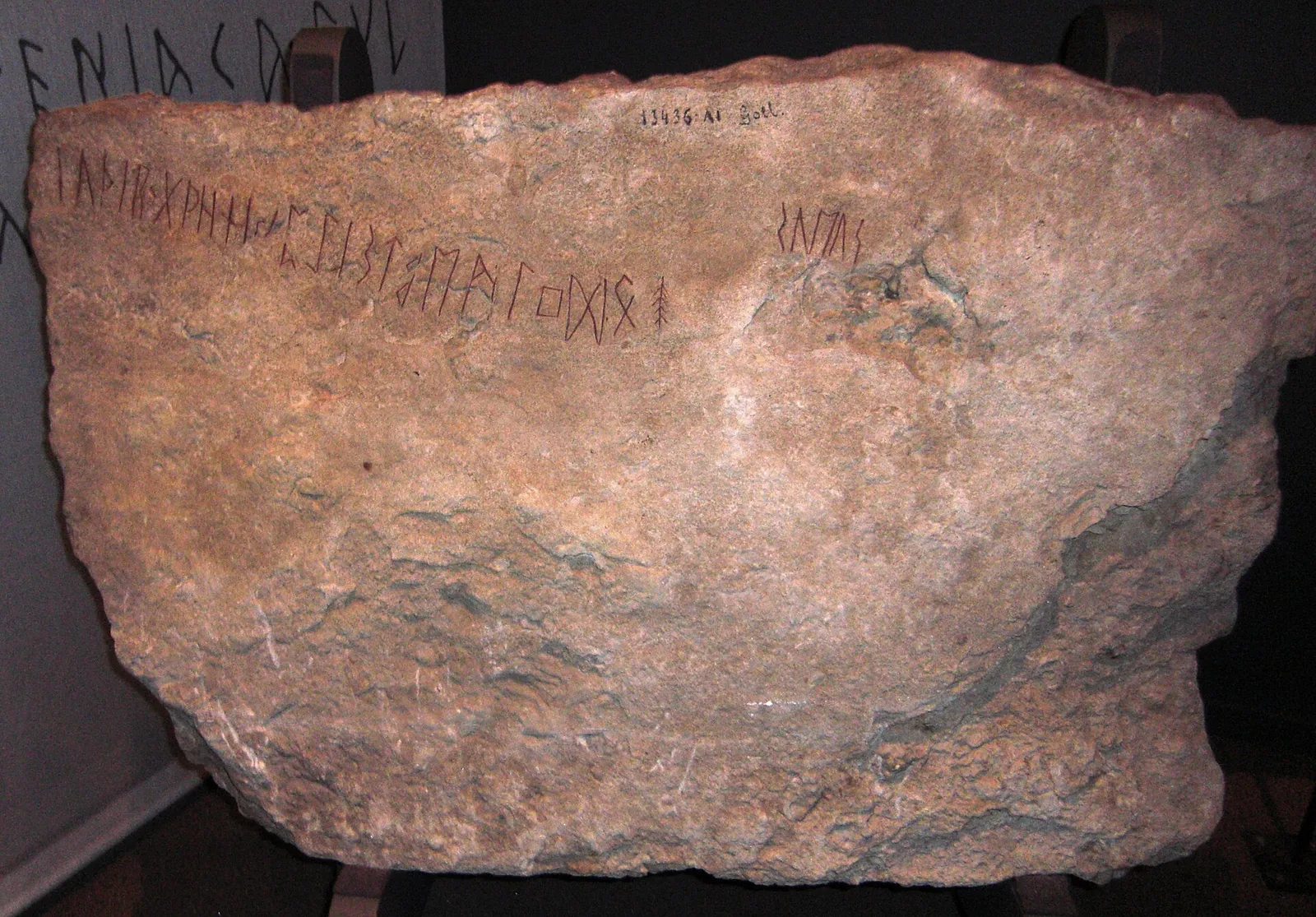
The distinctive, angular look of the runes, with few curves, is perhaps partly explained by the realities of carving in wood. It was easier to carve straight lines than curves. Stone, metal and bone were also used as writing materials, with most of the surviving examples of rune carvings being on the harder materials. Wood may have been the most widely used, but unfortunately it rots and doesn't readily survive, leaving us with an incomplete picture.
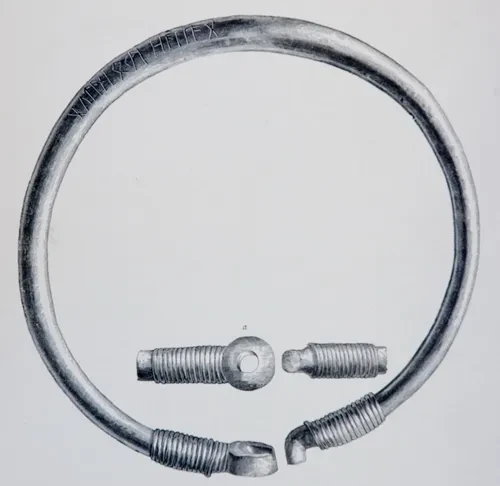
Several hundred Elder Futhark inscriptions have been discovered, many in what we would now call Denmark and other parts of southern Scandinavia, with others in Germany and the Netherlands. A particularly striking 4th-century gold neck-ring associated with the Goths, the Ring of Pietroassa, was also found in Romania, carrying a runic inscription. That reflects how far Germanic peoples and their connections extended across Europe. Generally, the inscriptions are short and record names, sometimes of owners and makers. Some of the Elder Futhark stones also commemorate the dead.
As well as the more mundane inscriptions, archaeologists have found thin gold pendants marked with runes that may have been intended for magical or protective purposes. These pendants, known as bracteates, date from the 5th and 6th centuries, and some contain words or formulae that aren't names or messages. 'Alu' is possibly one example of a protective word, and it's found frequently on such pendants.
As touched upon earlier, writing was used for magic across the ancient world; Rome even kept a written collection of prophecies under guard. It wasn't specific to runes. Greeks and Romans would write curse tablets, thousands of which survive today. A curse would be scratched onto a thin sheet of lead, which was often folded and then buried or thrown into water. Amulets, too, have been found with protective inscriptions in Latin, Greek and other scripts.
The Roman historian and politician Tacitus wrote about divination amongst the Germanic peoples in his 'Germania' in AD 98. He describes how a branch from a fruit tree is cut into small slips. Each is subsequently marked with signs and scattered at random on a white cloth. Then a priest or head of a household would pray, look up to the sky and take three slips one at a time. The marks would be interpreted for meaning.
It's not certain the marks were runes; Tacitus used the word 'notae', which means 'marks' or 'signs'. Tacitus also relied on other people's testimony for this passage, rather than direct observation.
One Script, Two Directions
The Elder Futhark alphabet remained largely stable for a few hundred years. In the 5th century, a new version called the Anglo-Saxon Futhorc appeared in England and the North Sea coastal areas of the Netherlands and Germany (an area then known as Frisia). New runes were added to the existing ones in order to accommodate the sounds of Old English and Old Frisian. This new version of the alphabet grew to 28 characters and ultimately over 30.
Then, by around AD 800, another version had also appeared, this time in Scandinavia. This one was called the Younger Futhark, and it actually reduced the number of runes from 24 to 16.
Given the Anglo-Saxon Futhorc gained more runes to accommodate new sounds, one might conclude that the Younger Futhark reduced the number of runes because fewer sounds were needed. This wasn't the case. Old Norse was gaining sounds, just like Old English, but instead dealt with them by making runes stand for several different sounds. This resulted in a much harder script to read, since it wasn't always immediately clear what each rune stood for.
As to why the Scandinavians chose this seemingly more complicated route, no one really knows. It may have been due to a desire to actually simplify carving (a sentence with fewer runes covering more sounds might be easier to carve) or be reflective of a change in who was using the script and the reason for using it. There may also have been a push to standardise the runes in the area.
In turn, the Younger Futhark was the main script the Vikings used, and is sometimes the type of runes we can see in curio shops today.
The Decline and Revival of Runes
The predominance of runes among Germanic peoples on the continent was not to last much beyond AD 700. The spread of Christianity across Europe brought the Latin script, which gradually took over as the main writing system. In England, the Anglo-Saxon Futhorc survived a few hundred years longer, diminishing in importance until the 11th century when it too was replaced.
The one part of Europe where the runes persisted was Scandinavia. Here, Latin and runes were used in tandem until the fourteenth century. After that point, runic writing still survived in specific rural areas (Dalarna) and amongst scholars.
This remained the case for centuries until a gradual rekindling of interest occurred. Academics became keen to investigate translations, such as Norwegian philologist Sophus Bugge, who in 1878 published his interpretation of a particularly difficult runic inscription called Rök.
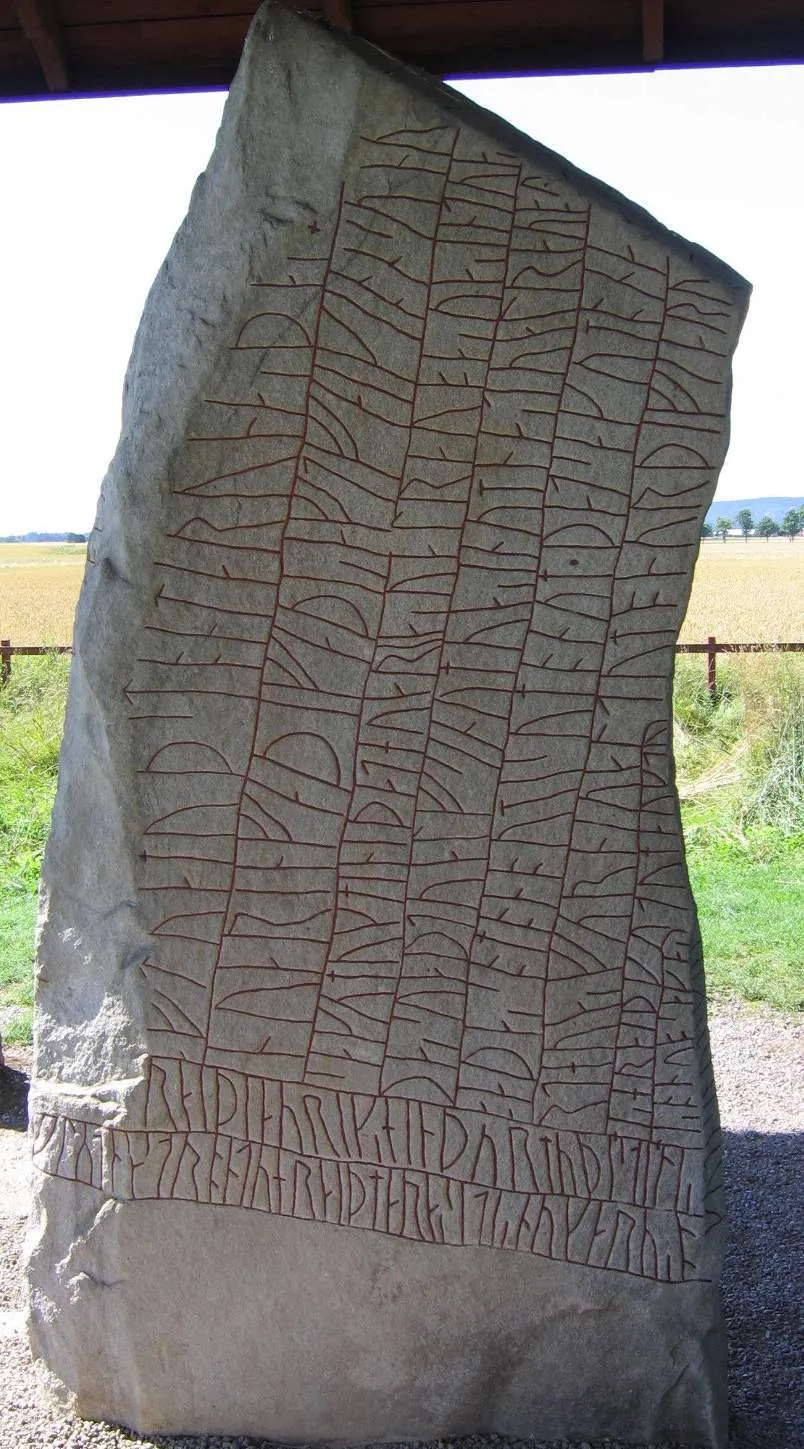
Due to this and other factors including the Norse mythology portrayed in Wagner's Ring Cycle, first performed in full in August 1876, and a romantic nationalism sweeping across Europe, runes became culturally relevant again. Other characters with varying motives soon entered the scene, putting their own interpretations on runes that weren't necessarily historically accurate. We'll cover two of them in the next section.
Guido von List and the Invention of "Ancient" Runes
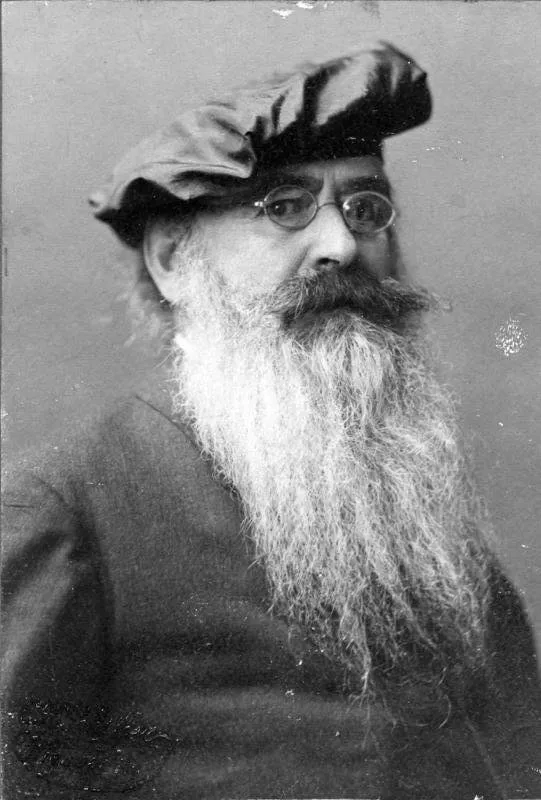
The first of those individuals I'm going to focus on is Guido von List. He was an Austrian occultist and writer, born in 1848. According to biographical accounts, his interest in runes came about in an unusual fashion following a cataract operation in 1902, when he experienced an eleven-month period of blindness. During this period, he claimed that he had unbidden visions of runes appearing to him. Upon his recovery, he wrote his thesis in a manuscript which he submitted to the Imperial Academy of Sciences in Vienna. They rejected his work.
Undeterred he pressed on and, in 1908, published two books. In the first, Das Geheimnis der Runen (The Secret of the Runes) he described a runic script with 18 characters and their meanings. He called them the Armanen runes, based on his claim that the Hermiones (an ancient Germanic tribal group named in Tacitus's 'Germania') were a Latinised form of the German word 'Armanen'. In the second book, Die Armanenschaft der Ario-Germanen, he went further, inventing a priesthood, the Armanenschaft, around his interpretation, saying that this was the original religion of the Germanic peoples.
Von List's runic script of 18 characters included 16 adapted from the Younger Futhark. The other two were 'Gibor', which appears to resemble the Anglo-Saxon 'gyfu' rune in name and the Wolfsangel symbol in shape; and 'Eh', which borrows its shape from Younger Futhark's 'Ar' rune and takes a name from an Anglo-Saxon Futhorc rune.
Von List's work played into a nascent pan-German nationalism, part of the same völkisch movement that would later feed Nazi ideology, though it would be unfair to hold him personally responsible for that later use since he died in 1919, long before the Nazis came to power. One unpleasant footnote remains regardless: one of his runes, Sig, was adapted by SS officer Walter Heck into the emblem of Himmler's SS.
After the war, the runes' association with the SS made them politically toxic in Germany for decades, but that didn't stop occultists such as Karl Spiesberger reclaiming them. He took List's Armanen runes and stripped out their racist and völkisch content, repackaging them as one more tool for individual occult practice.
Ralph Blum and the Modern Rune Oracle
The history of runes now leaves Europe for the first time and tells the tale of the second man I want to talk about, Ralph H. Blum.
Blum, a Harvard graduate from Connecticut, was a writer and anthropologist. While researching in England, he was introduced to runes by a local woman. He then returned to his home in America with a set of runes and proceeded to forget about them.
A few years later, after his marriage had ended and he was, by his own account, broke, depressed and out of work, Blum was dusting books in a library. He accidentally knocked a bag which dropped into his hand. It was the same set of runes.
Apparently keen for a distraction from his woes, Blum started learning all about the runes. He began developing his own system of rune interpretation, mostly borrowing the runic names and shapes from the Elder Futhark set. The problem was compiling the meanings due to a lack of information from the original Germanic descriptions. Mindful of a course he had taken on oracular traditions taught by Dr. Allan W. Anderson, Blum decided to apply Chinese I Ching interpretations instead to fill the gaps.
His work culminated in the publication of 'The Book of Runes: A Handbook for the Use of an Ancient Oracle' in 1982. It came with a bag of rune tiles and popularised the blank rune, which, according to Blum, was already included in the set he had obtained in England. No such rune appears in any historical runic alphabet.
Multiple editions later, the book is still in print. It is one of the reasons runes hold their place in popular culture today.
Blum managed to take the elements of mysticism and magic surrounding them to another level. Specifically, he helped popularise a modern system of drawing runes for personal guidance, for which there is no documented equivalent in ancient runic practice.
Runes Today
That largely explains where runes stand now, then. People love them as trinkets and curios as well as symbols of deep spiritual significance. Both are modern interpretations that don't really reflect the original meanings behind the characters, and that doesn't seem to matter to either camp.
In truth, the meanings of runes have been evolving ever since they were first adopted. Academics such as Bugge helped preserve and revive knowledge of the runes, while their continued use in some areas ensured that the script itself was never entirely forgotten. But inevitably, like Chinese whispers, meanings change over the years.
People have used the runes to serve different purposes depending on the agenda, as evidenced by their use as an SS symbol in the second world war. The likes of List and Blum had a more overarching vision in their own ways. The former created an occult system tied to racial nationalism and the latter a personal divination practice shaped by the I Ching. They used the various historic runic scripts as a source from which to create a modern version infused with their own interpretations.
No doubt someone in the not too distant future will reinterpret the runes again and give them a different angle. I certainly wouldn't bet against it.
Frequently Asked Questions
What is the oldest runic alphabet?
The oldest known runic alphabet is the Elder Futhark, a 24-character script used by Germanic peoples from before AD 150. It takes its name from the sound values of its first six runes: f, u, th, a, r, k.
Who invented the modern practice of reading runes for guidance?
The modern practice of drawing runes for personal guidance traces to Ralph Blum's 1982 book The Book of Runes. Blum built his interpretations using the Chinese I Ching rather than any historical Germanic source, and he also popularised the blank rune, which does not appear in any ancient runic alphabet.
Why are runes associated with the SS?
Austrian occultist Guido von List gave the old sun rune the name Sig in his 1908 rune system. SS officer Walter Heck later adapted it into the official emblem of Heinrich Himmler's SS. Von List had built an entire invented priesthood, the Armanenschaft, around his runes.
What is the difference between the Elder Futhark and Younger Futhark?
The Elder Futhark had 24 runes and was the main runic script of the Germanic peoples until regional versions took over: the Anglo-Saxon Futhorc in England from the 5th century, and the Younger Futhark in Scandinavia by around AD 800. The Younger Futhark cut the alphabet to just 16 runes, even though Old Norse needed more sounds rather than fewer, so individual runes had to stand for several sounds.
◆ Also In The Stars

◆ Go Deeper
Tacitus, Germania (AD 98), the Roman account of Germanic divination with marked slips of wood.↗ The Rök Runestone and the End of the World, a new reading of the longest runic inscription (Futhark journal, 2020).↗ Ralph Blum, The Book of Runes, the handbook that launched the modern rune oracle (free to borrow).↗