Why Reusable Rockets Matter to Space Travel
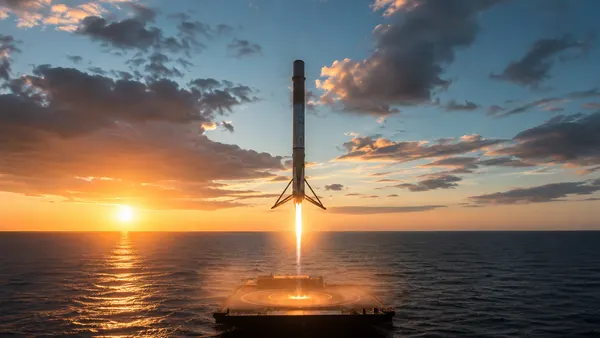
Falcon 1 proved SpaceX could reach orbit. Reusability was a riskier bet, one NASA and other agencies had tried and failed at for decades. Here is how SpaceX pulled it off, and why nobody was sure it would work.
Why Falcon 1 Failed Three Times Before It Finally Flew
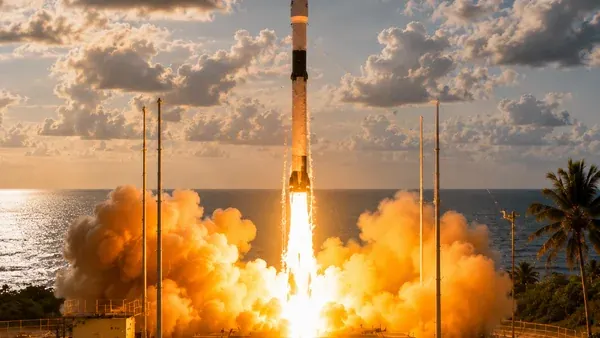
Falcon 1 blew up three times over four years, the last of its money nearly gone with it. Built from spare parts in six weeks, the fourth launch worked, and secured a $1.6bn NASA contract that kept SpaceX alive.
Elon Musk's Russia Trip: How SpaceX Really Began
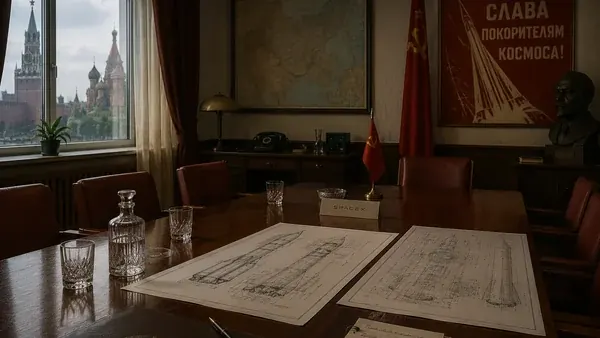
In 2001, Musk did not want a rocket company. He wanted Soviet missiles and a greenhouse on Mars. Two trips to Moscow went nowhere, so he ran the numbers on a rocket himself. That spreadsheet is why SpaceX exists.
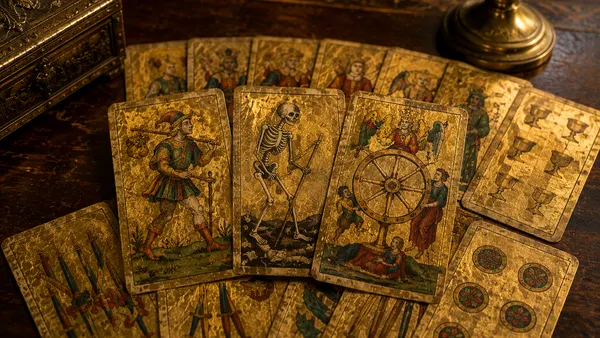
The History of Tarot: Card Game to Fortune-Telling Tool
Tarot started as a 15th-century Italian card game, not a divination tool. Discover the Visconti-Sforza deck, the Egyptian myth invented by a French clergyman in 1781 and the 1909 illustrations behind modern tarot.
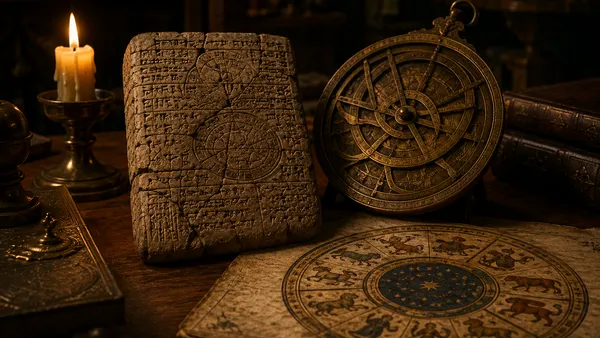
The History of Astrology: From Babylon to the Birth Chart
Astrology began in Babylon as omens for kings, not individuals. Discover how the Greeks invented the horoscope, why medieval universities taught it alongside medicine and how it still ended up in your newspaper.

Hildegard of Bingen: Mystic, Composer and Prophet
Hildegard of Bingen spent her first thirty years enclosed in a monastery cell before becoming one of medieval Europe's most influential women, a mystic whose visions won papal approval and a sainthood centuries later.

The Antikythera Mechanism: An Ancient Computer
A shipwreck yielded the most advanced machine the ancient world ever built. Pulled from the sea in pieces, it could predict eclipses and track five planets, and nothing else came close to it for fourteen hundred years.

The Sibylline Books: Secret Prophecies and Rome's Fall
The Sibylline Books guided Rome through five centuries of crisis, bought from the Cumaean Sibyl and consulted in secret by the Senate alone. Destroyed twice, the second loss came just two years before Rome fell.

Can AI Predict the Future? The New Oracle Explained
AI is already forecasting outbreaks, markets and weather with real accuracy. Discover how it compares to ancient oracles, why its fluent confidence can mislead, and who really controls the predictions it makes.

History of SpaceX: The Journey From Falcon 1 to Starship
SpaceX's Starship is the largest rocket ever built. Three early flights exploded before Flight 5 caught the booster mid-air. This is the full story, from Falcon 1's repeated failures to the rocket built to reach Mars.

The Book of Revelation: Bible's Most Debated Prophecy
The Book of Revelation has fuelled centuries of art, anxiety and argument. Most people's version of it bears only a passing resemblance to what the text actually says, from who wrote it to what 666 really means.

Tiresias: The Blind Prophet of Ancient Greece
Tiresias was the greatest prophet in ancient Greece. He warned Oedipus, Creon and Pentheus, and all three were destroyed. He was right every time, and it made no difference. Now Nolan’s Odyssey has brought him back.
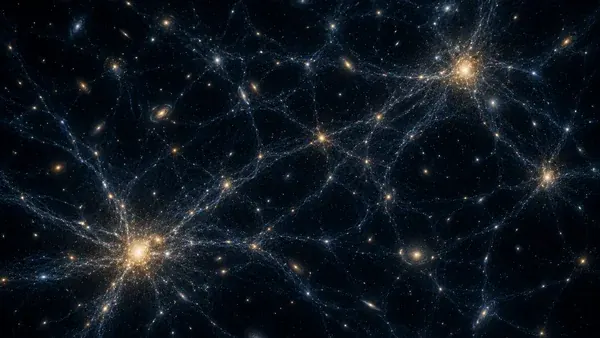
What Is Dark Matter Made Of? The Search So Far
Dark matter makes up around 27% of the universe, yet nobody knows what it is made of. Scientists can see its gravitational effects, but the particles behind them remain one of physics' greatest unsolved mysteries.

The Drake Equation: How Many Civilisations Are There?
Frank Drake's famous equation promised a way to estimate how many intelligent civilisations inhabit the Milky Way. More than sixty years later, it still asks one of humanity's biggest unanswered questions: are we alone?

Is Planet Nine Real? The Hunt for a Hidden World
Planet Nine is either the biggest undiscovered object in the solar system or a pattern that does not exist. Two Caltech astronomers built the case over a decade, and the Vera C. Rubin Observatory should settle it.

Who Was John Dee? Astrologer, Spy, Philosopher
John Dee advised Queen Elizabeth I, coined the phrase British Empire and spent years attempting to communicate with angels through a convicted forger. He died in poverty, dismissed as a wizard, learned as he was.

Who Was the Real Merlin? The Man Behind the Wizard
Before Merlin became King Arthur's wizard, there was Myrddin Wyllt, a sixth-century Welsh poet and seer driven mad by battle. A warrior and a prophet, and perhaps the real figure behind Britain's most famous legend.

What Happens to Earth When the Sun Finally Dies?
The Sun is halfway through its life. In about a billion years Earth loses its oceans, and five billion years from now the star that made us becomes a swollen red giant, engulfing Mercury and Venus along the way.

Nostradamus Henry II Prediction: The Fatal Joust of 1559
Century 1, Quatrain 35 was published in 1555. Four years later, Henry II died in a Paris jousting arena the way it seemed to describe. Catherine de Medici had feared it before her husband climbed into the saddle.
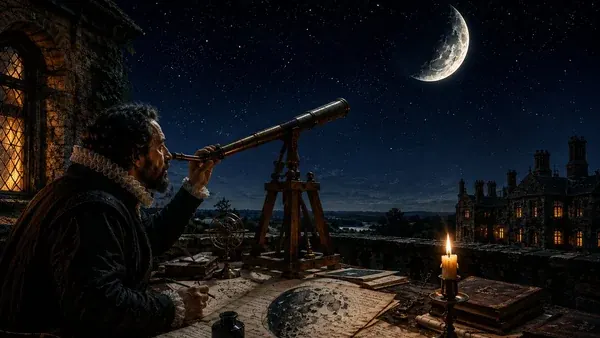
How Thomas Harriot Drew the Moon Before Galileo
On 26 July 1609, Thomas Harriot drew the moon through a telescope. The drawing predates Galileo's published lunar work by months. Harriot never published it. This is the story of the astronomer history nearly forgot.

The Oracle of Delphi: Ancient Greece's Sacred Site
For more than a thousand years the Oracle of Delphi shaped the decisions of kings, generals and city-states before any war, new colony, or decision that carried real weight. Not superstition. Political necessity.

Who Was the Pythia? Women of the Oracle of Delphi
The Pythia was not a single prophetess but a title held by dozens of women across a thousand years. Almost none left a trace in the historical record. This is what we know about the women behind the Oracle of Delphi.

DART: NASA's Planetary Defence Test on Dimorphos
Humanity now knows it can deflect an asteroid. Whether it can do so in time, with enough warning, and with the international cooperation required, is a different question entirely — one DART never had to answer.

How Did Rasputin Die? Poison, Bullets and the Truth
The poison didn't work. Neither did the bullets. Or so the story goes. Rasputin was shot in the forehead in December 1916, and Prince Felix Yusupov's colourful account of that night was largely his own invention.

Cassandra: The Myth of the Prophet Nobody Listened To
She saw the fall of Troy coming and said so, repeatedly. Nobody listened. Thousands of years later her name is still being used for exactly that situation, which tells you something about how little has changed.
Nostradamus's Quatrains: Inside His Book of Predictions
Before the famous predictions, there is the form itself. This article introduces the 942 quatrains of Les Prophéties, the language problem behind them and the mechanism that keeps Nostradamus alive after five centuries.
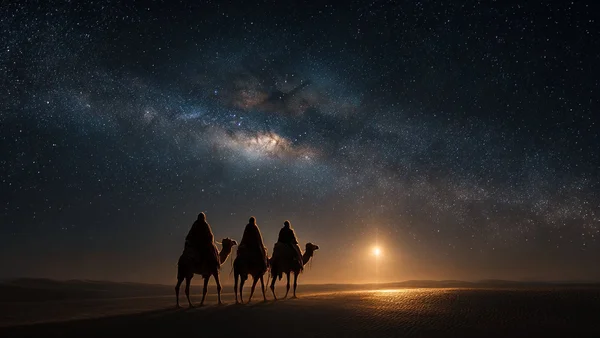
What Was the Star of Bethlehem? Myth or Astronomy?
The Bible gives us one source, one story, and almost no detail. Two thousand years of astronomers have been trying to work out what was actually in the sky, and a Jupiter-Saturn conjunction in 7 BC is the leading answer.
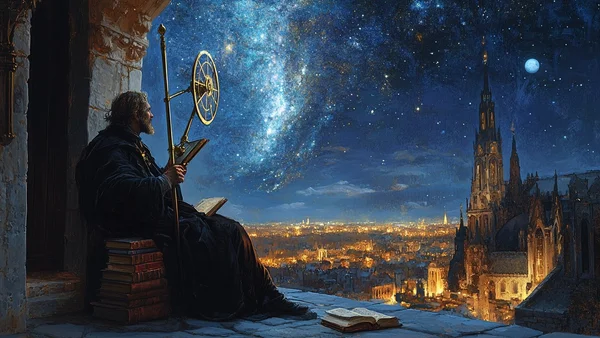
Copernicus Origins: The Man Who Moved the Earth
Before he changed cosmology, Nicolaus Copernicus spent decades as a church administrator, physician and diplomat, quietly working out his theory in private. The first in a series on the man behind the Earth-moving idea.
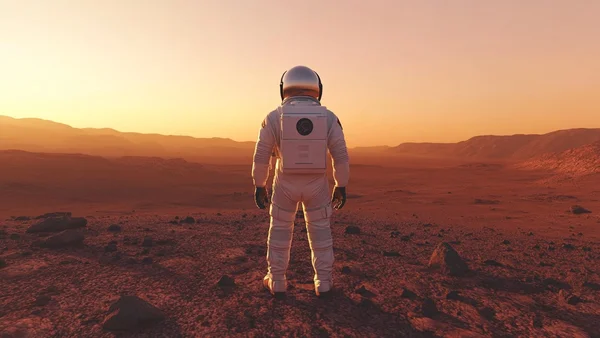
A Year on Mars: What Life on the Red Planet Looks Like
The first crew to reach Mars will spend roughly 500 days on the surface with no resupply and no way home until the planets align. Here is what that first year, bone loss, comms delays and all, might actually look like.
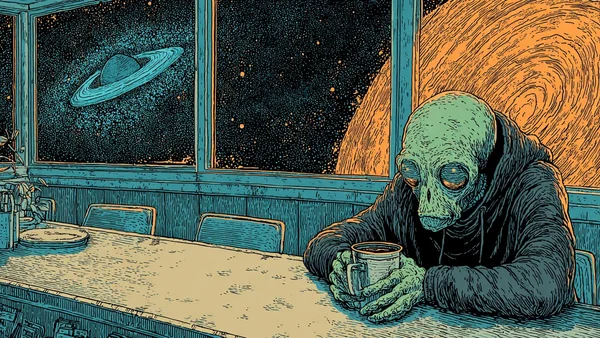
The Fermi Paradox: Are We Alone in the Universe?
Are we alone in the universe? The conditions for life appear to be everywhere. The evidence for it, beyond Earth, is nonexistent. The Fermi Paradox has been asking why for seventy years, with no satisfying answer yet.